A productive desert garden is about more than finding plants that can survive the heat. It is about helping those plants create better conditions for one another, and making a space you enjoy spending time in.
At Epic Yard Farm in Tempe, Arizona, fruit trees, herbs, vines, groundcovers, and shade trees work together in a wonderfully personal food forest. There are familiar desert favorites, surprising experiments, plants connected to family heritage, and shaded places to sit with lunch.
Jacq and Jeremy began in 2013 with a simple question: Could the water going toward a grass lawn support something beautiful and edible instead? Their first garden had about 1,500 square feet of plantable space on a typical suburban lot. Six years of successes and failures helped shape what came next.
In 2019, they moved to their current property and started Epic Yard Farm 2.0. The three-quarter-acre lot has roughly 15,000 square feet of plantable space. Today, it holds more than 150 fruit trees, berries, citrus, and vines, representing over 60 varieties of edible plants.
What I love most is that this is not a finished garden with every answer worked out. It is a living example of observing, experimenting, and adjusting.
Table of Contents
- Key Takeaways
- A Mediterranean Garden Built for Sun and Heat
- Blackberries, Cherries, and an Experimental Orchard
- Cool Roots and Carefully Chosen Microclimates
- Creating Canopy with Vines and Reused Structures
- A Wilder Desert Oasis and Productive Date Palms
- Peaches, Mulberries, and Figs That Do More Than Produce Fruit
- Jujubes and an Australian-Inspired Hot Zone
- Unusual Fruit, Protective Bags, and Plants with Personal Meaning
- Make Room to Enjoy the Food Forest
- Asparagus and a Small-Space Patio Orchard
- A Kitchen Garden That Feeds People and Pollinators
- Preserve the Harvest, Share the Abundance, and Keep Adjusting
Key Takeaways
- Layer trees, herbs, vines, and groundcovers to shade soil and create more protected growing spaces.
- Match fruit trees to the winter cold, summer exposure, and frost patterns within your yard.
- Choose multipurpose plants that provide food while supporting shade, pollinators, or organic matter.
- Keep experimenting and adjust the garden as plants reveal what works in each location.
A Mediterranean Garden Built for Sun and Heat
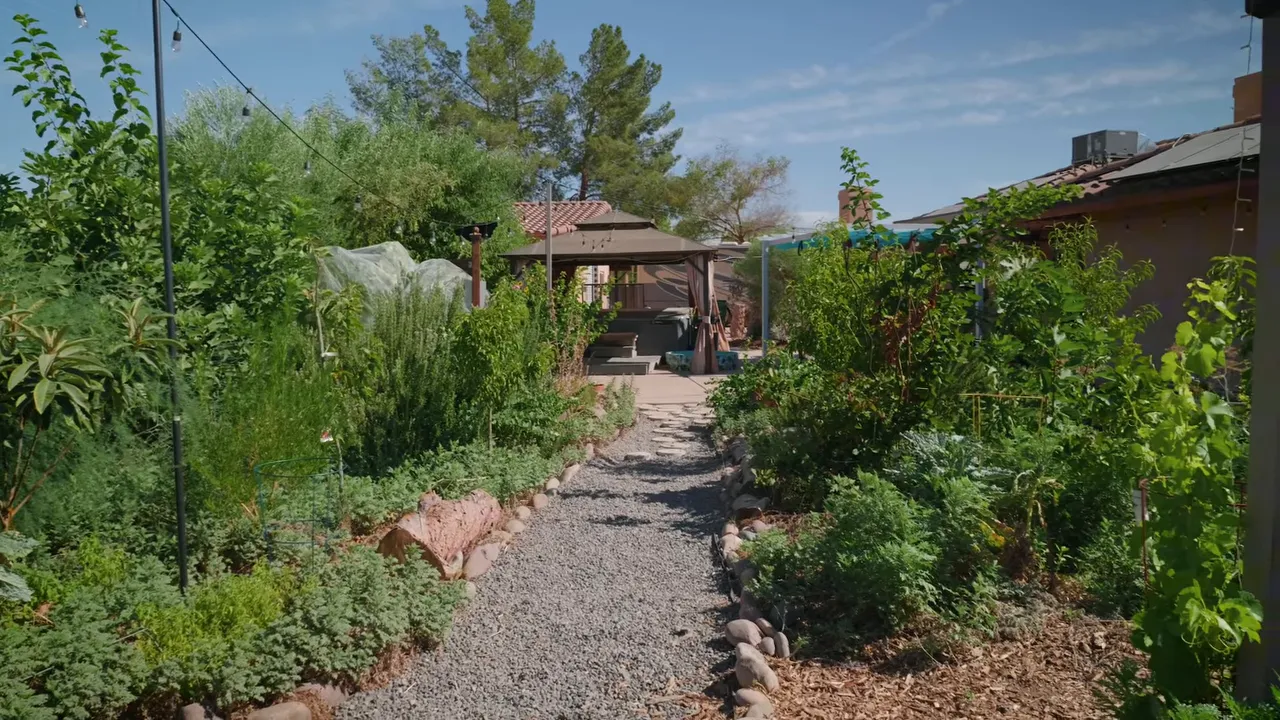
The front of the property begins with plants Jacq knew could handle a sunny, hot location. Rosemary, capers, figs, citrus, and peaches establish the character of this Mediterranean-inspired area without relying on a large overhead canopy.
There are several layers even here. Fruit trees rise above spreading herbs, while low-growing plants help cover the soil.
Capers and rosemary make a practical pairing
The two caper plants went in soon after the move in 2019. They have become productive plants in full sun, supplying two different harvests:
- Unopened flower buds for preparing capers.
- Caper berries that form after flowering and can be pickled for cooking.
Jacq planted them beside rosemary because the plants have similar, relatively low water needs. That is a useful design principle: neighboring plants are easier to manage when their irrigation needs fit together.
One enormous barbecue rosemary shows how much a single herb can contribute. Its flowers attract bees and hummingbirds, its spreading growth shades the ground, and its straight stems have a kitchen use beyond seasoning. Jacq strips the leaves from a stem and uses it as a skewer for meat. It really is barbecue rosemary!
Young fruit trees are mixed into the planting, including a Beverly Hills apple and an apricot. White sage adds contrasting foliage, fragrance, and visual interest.
Volunteer plants have a job, too
Not every useful plant arrived with a nursery tag. Self-seeded ragweed grows in pockets throughout the garden. Jacq allows some of it to remain as living groundcover, using the green growth to shade and cool the soil.
Because ragweed pollen can trigger allergies, she tries to remove the flower heads before they release pollen. This is a deliberate management choice, not simply leaving everything alone.
The question is not only whether a plant was planned. It is also what that plant is doing in the garden.
Blackberries, Cherries, and an Experimental Orchard
Among the peach trees, Jacq is trialing two blackberry varieties. Their differences are especially interesting for hot-climate gardeners, where an earlier harvest can help fruit develop before intense summer heat.
- Prime-Ark Freedom: A University of Arkansas variety with semi-erect growth that can fruit on both first-year and second-year canes. In Jacq’s garden, flowering began around February, fruit followed in March and April, and May was an important harvest period.
- Superlicious: A Monrovia blackberry being tested nearby. It flowered later than Prime-Ark Freedom in this garden.
Prime-Ark Freedom gave Jacq an earlier start to the spring blackberry harvest. That does not make it a guaranteed choice for every desert yard, but it makes the trial worth paying attention to.
A recently planted persimmon marks the transition toward more experimental orchard plantings. Jacq has seen mature persimmons growing locally, although she suspects sun sensitivity helps explain why they are not more common.
Low-chill cherries require patience
The cherry planting includes Minnie Royal, Royal Lee, and Stella. Jacq had already harvested cherries at the previous property, so this experiment comes with a little encouraging experience.
One challenge she observed was getting compatible trees to flower at overlapping times for cross-pollination. At the first garden, Minnie Royal and Royal Lee took about three years before their flowering overlapped well enough to produce that first harvest.
Pruning to encourage fruiting spurs was another part of establishing the trees. The reward for all that patience was one cherry, which they split. And yes, it was delicious.
The useful lesson is to look at both flowering overlap and the development of fruiting wood before deciding a young cherry planting has failed.
Small fruit trees, taller shade trees
Many orchard trees are planted close together, with the intention of keeping them small through pruning. Jacq wants to reach the fruit without bringing out a ladder.
Above those manageable fruit trees, she is adding a separate canopy layer. The goal is dappled light, not dense shade that prevents fruit production. Mesquite-type trees fit that idea, and royal poinciana is another tree she is training and pruning for a more open canopy.
That distinction matters in a desert food forest: shade should soften the conditions without taking away all the light the crop needs.
Cool Roots and Carefully Chosen Microclimates
A secondary orchard contains loquat, peach, and pear trees. At the base of two young pears, African blue basil provides one of the clearest examples of layering in the garden.
The basil shades the soil around the trees, helping protect their root zones from summer heat. Keeping roots cooler was one of Jacq’s strongest lessons from the first property. Water matters, of course, but adding water alone does not solve every problem created by hot, exposed soil.
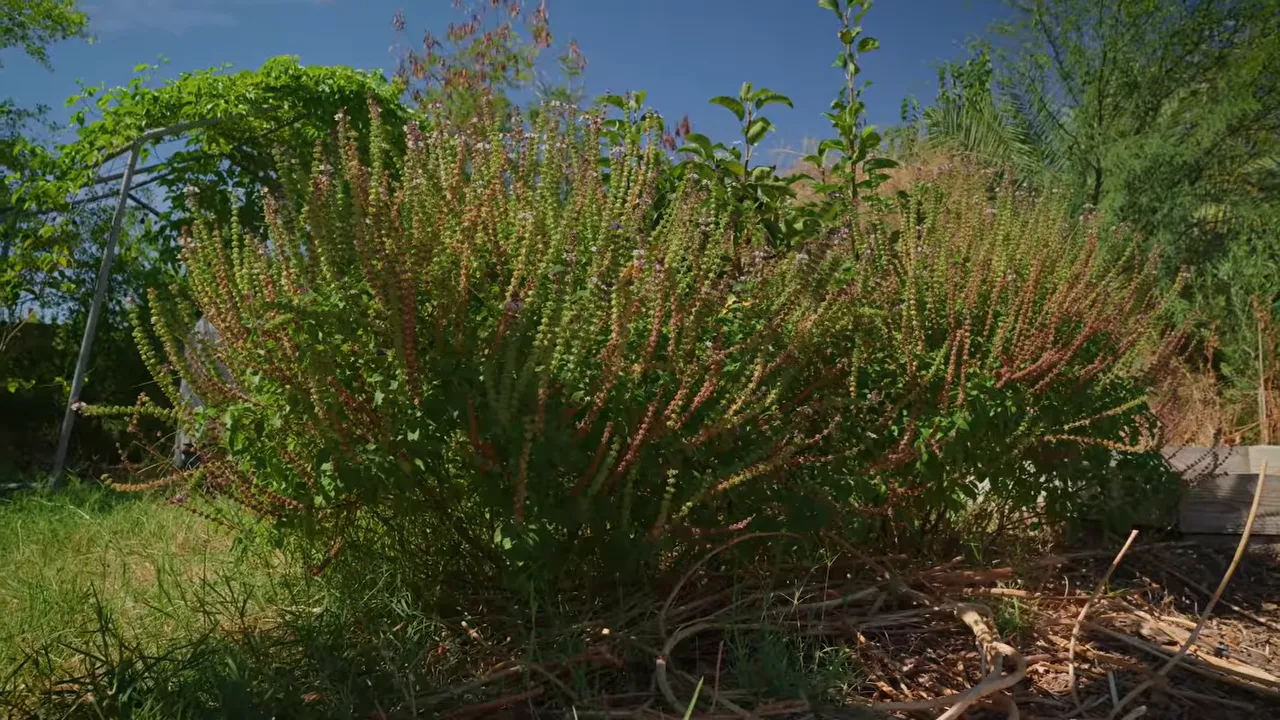
The pears, Southern Queen and Southern Bartlett, are experiments inspired by hot areas of the southeastern United States. Tempe does not share their humidity, so Jacq is using companion plants to create a cooler, more sheltered setting around them.
A hot summer location can still be a cold winter pocket
This orchard strip receives strong summer sun, yet it is also one of the property’s coldest winter areas and experiences hard freezes.
A Sierra Beauty apple grows in that colder section. Jacq describes the variety as needing roughly 700 to 800 chill hours, yet it had clusters of fruit even after a warm winter. That observation does not establish how many chill hours the tree actually received. It does show why a whole-yard climate description may miss important differences within the property.
The practical approach is simple:
- Identify the places that stay coldest in winter when choosing locations for deciduous fruit trees with chilling needs.
- Look for warmer, more protected areas for cold-sensitive plants.
- Pay attention to summer afternoon exposure as well as winter temperatures.
Later in the garden, Jacq points out an even more striking example. A White Pakistan mulberry froze and died in one location, while another planted only a few feet away survived. Small differences can matter a great deal.
Creating Canopy with Vines and Reused Structures
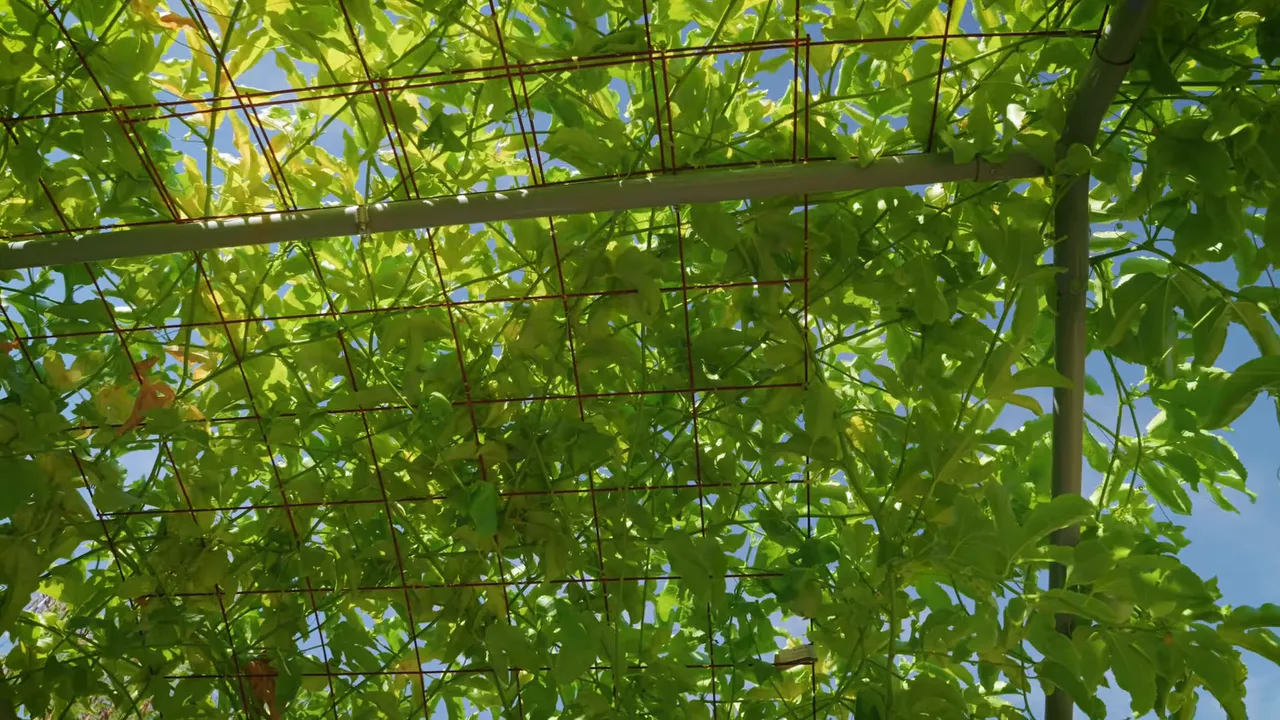
You do not have to wait for a shade tree to mature before adding an overhead layer. In a particularly hot area exposed to afternoon summer sun, Jacq and Jeremy converted a portable carport frame into an arbor.
Passion fruit is already climbing over the structure and carrying fruit. An ornamental bleeding heart vine adds another layer of interest, and a hardy kiwi trial is growing nearby. Additional mesh will give the vines more surface to climb.
An outdoor mushroom experiment underneath
Beneath the arbor is an outdoor mushroom-growing bed. Growing mushrooms outside in the desert is a different challenge from growing them indoors, particularly because of the dry air.
This setup combines netting, shade cloth, and a timed misting system to create a more humid environment. Jacq is experimenting with mushrooms that tolerate warm conditions, and the bed had already produced a few crops during its first year.
It is a good example of layers doing different jobs: vines create overhead protection, while the growing enclosure manages conditions more closely below.
A Wilder Desert Oasis and Productive Date Palms
The planting becomes less formal farther from the house. In an area Jacq calls the desert oasis, native volunteers are allowed to settle in among plants such as wolfberry and littleleaf cordia.
Some Bermuda grass also returned where the original lawn removal missed patches. Rather than keeping it closely mowed, Jacq allows it to stay relatively tall in this area. She values the way the growth shades the ground and helps retain moisture compared with exposing the soil.
This is not a recommendation to introduce Bermuda grass into a food forest. It is an example of working with an existing condition and deciding how to manage it.
Black Sphinx and Barhi dates
The Black Sphinx date palm was carrying its second crop, with Jacq estimating a possible harvest of about 100 pounds. That is enough to eat, preserve, share, and potentially sell.
She noted that specialty dates could sell for around $10 per pound, making productive trees a possible source of income as well as food. Those figures were her estimate for this crop and market, not a guaranteed yield or return.
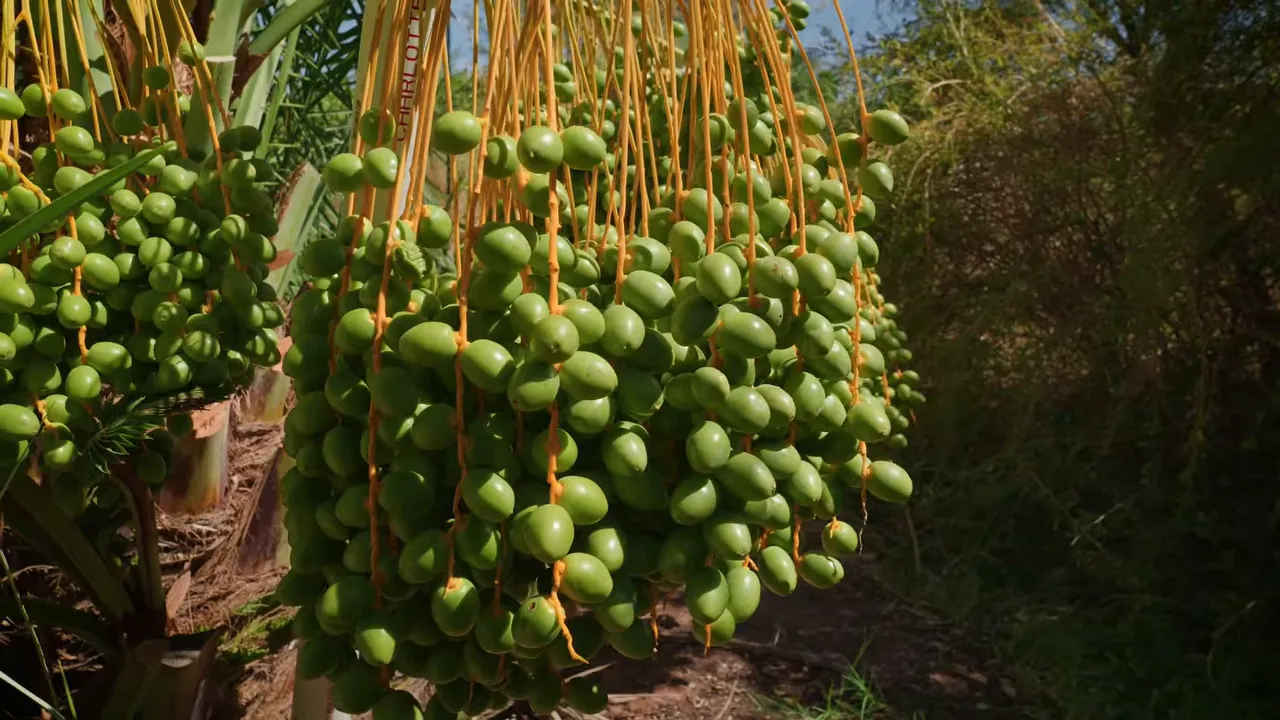
A Barhi date palm offers a different eating experience. Its fruit can be enjoyed at the fresh, crunchy stage rather than waiting for the soft, caramel-like stage many people associate with dates.
Jacq gives her fruiting date palms more water than a purely ornamental planting would receive. In her experience, the irrigation commitment for production is not dramatically different from that of a peach tree.
The property also has a male date palm. With two female palms, Jacq wants a source of pollen for hand-pollination. Maintenance requires care because of the sharp spines. Removing obstructing spines is one practice she has learned to make access easier, but these are still plants to work around cautiously.
For Jacq, date palms are a long-term food investment, much like asparagus: establish a perennial crop once, then care for it over many productive years.
Peaches, Mulberries, and Figs That Do More Than Produce Fruit
Place later peaches where they get afternoon protection
Near flowering Arizona native mint, a Babcock peach occupies a spot with summer afternoon shade. Its fruit normally ripens around late June or early July in this garden, later than many of the other peaches.
That timing influenced its placement. Earlier-ripening peaches occupy sunnier locations, while this later crop receives more protection as temperatures climb.
The peach harvest was disappointing during the season of my visit. Jacq suspected a March heat wave during bloom contributed, rather than blaming insufficient winter chill alone. She cited research suggesting that prolonged exposure above about 86°F can damage peach pollen, including a threshold of more than five hours.
Her larger point is useful even without treating that number as a universal cutoff: poor fruit set can involve conditions during flowering, not only the winter that came before it.
Mulberries provide food, shade, and organic matter
Mulberries are among Jacq’s favorite multipurpose trees for getting a food forest started. They grow quickly and can supply more than a berry harvest.
- Shangri-La: Large, tropical-looking leaves and reliable berry production in this garden. Jacq describes the fruit as mostly sweet with some tartness, enjoyable from the red stage through dark purple.
- Pakistan: Long, slender fruit with a distinctive flavor, but more demanding during fruit development. Jacq has found that heavy watering during production helps this tree retain and ripen its crop.
- White Pakistan: A tree intended to become a taller canopy over a future gathering area. The surviving tree had fruited in spring and was developing another crop.
By contrast with the Pakistan mulberry, Jacq’s Shangri-La does not have dedicated irrigation and receives water associated with neighboring plantings. That is an observation about an established tree in this particular setting, not a reason to assume a new mulberry will need no irrigation.
Pruning determines how the trees function. Low branches make harvesting easier. A higher canopy creates room for sun-sensitive plants underneath. Prunings can be used for chop and drop, returning cut plant material to the soil surface as organic matter. Jacq also uses mulberry leaves for tea.
Pruning an established fig for renewed growth
A large fig came with the house. Based on the fruit and leaves, Jacq suspects it is Alma, although its identity is not confirmed.
During the first year, she cut it back to approximately her own height. The tree responded with strong growth and abundant fruit, and she plans to repeat that kind of size reduction when needed.
Her approach focuses on common figs grown mainly for the summer main crop, which develops on current-season growth. Encouraging new growth helps renew productive wood while keeping the tree manageable.
Under that canopy, the difference in comfort is noticeable. Shaded, mulched soil can be dramatically cooler than nearby exposed ground, sometimes by 20 to 40°F. The food forest is changing the growing environment, not simply filling it with trees.
Jujubes and an Australian-Inspired Hot Zone
Near a wall radiating afternoon heat, Chinese jujubes are producing despite receiving relatively little supplemental water.
Honey Jar has small, very sweet fruit with an apple-like eating experience and a pit in the center. Chico produces larger fruit with a different shape. Both tasted good, although the Chico fruit I sampled was not quite as sweet.
Jacq recognizes that additional water could improve fruit quality. These trees demonstrate tolerance of a difficult location, not the idea that minimal watering always produces the best crop.
Jujubes also connect the garden to her Chinese heritage. She uses the fruit in herbal teas and soups, including preparations with chicken and other ingredients. Some clusters are protected with bags so there is a blemish-free harvest alongside the fruit shared with birds.
Water reaches the back through a practical workaround
The far end of the property has no permanent irrigation supply piped to it. Jacq runs polyethylene tubing through the area and connects it to a hose on a timer.
That distinction is helpful: the back garden is not entirely unwatered, even though it lacks a conventional permanently supplied drip system.
Building a future canopy
A visit to the Australian section of Boyce Thompson Arboretum inspired the outback planting. Jacq was drawn to how cool the space felt beneath eucalyptus with abundant undergrowth.
Her planting includes:
- Bottlebrush, with flowers attracting hummingbirds.
- Queensland bottle tree, chosen for its eventual stout trunk and distinctive form.
- Snow Queen eucalyptus, intended as a main canopy tree and selected as a smaller option than some much larger gum trees.
Seeing diverse plants beneath eucalyptus at the arboretum encouraged Jacq to experiment rather than dismiss the tree as incompatible with an understory. Her goal is a mixed planting where canopy and pruned material help establish the next layers.
Unusual Fruit, Protective Bags, and Plants with Personal Meaning
One of the garden’s pleasant surprises is Sweet Treat pluerry, a plum-and-cherry hybrid. It has grown into a substantial tree, flowers heavily in spring, and produces fruit that ripens around mid-May here.
Although it has only a small drip outlet at its base, Jacq suspects its roots have found additional moisture somewhere nearby. A Candy Heart pluerry planted a few years later is another variety she hopes will establish just as well.
Protecting a small harvest
A nearby quince has individual fruit protected in paper orchard bags. The bags have a wire closure, and this particular style includes a small inspection window so Jacq can check development without removing the whole bag.
That little window is especially useful on grapes. We all want to peek!
Quince, a relative of apples and pears, is a cooking fruit in Jacq’s kitchen plans. She likes the idea of adding slices to apple pie for their firmer cooked texture and floral flavor.
A Tiger Panache fig receives more extensive protection. Its striped fruit has a rich interior Jacq compares to strawberry jam. Netting helps keep birds and some insects away, although rats have been a separate challenge, sometimes taking fruit before it ripens.
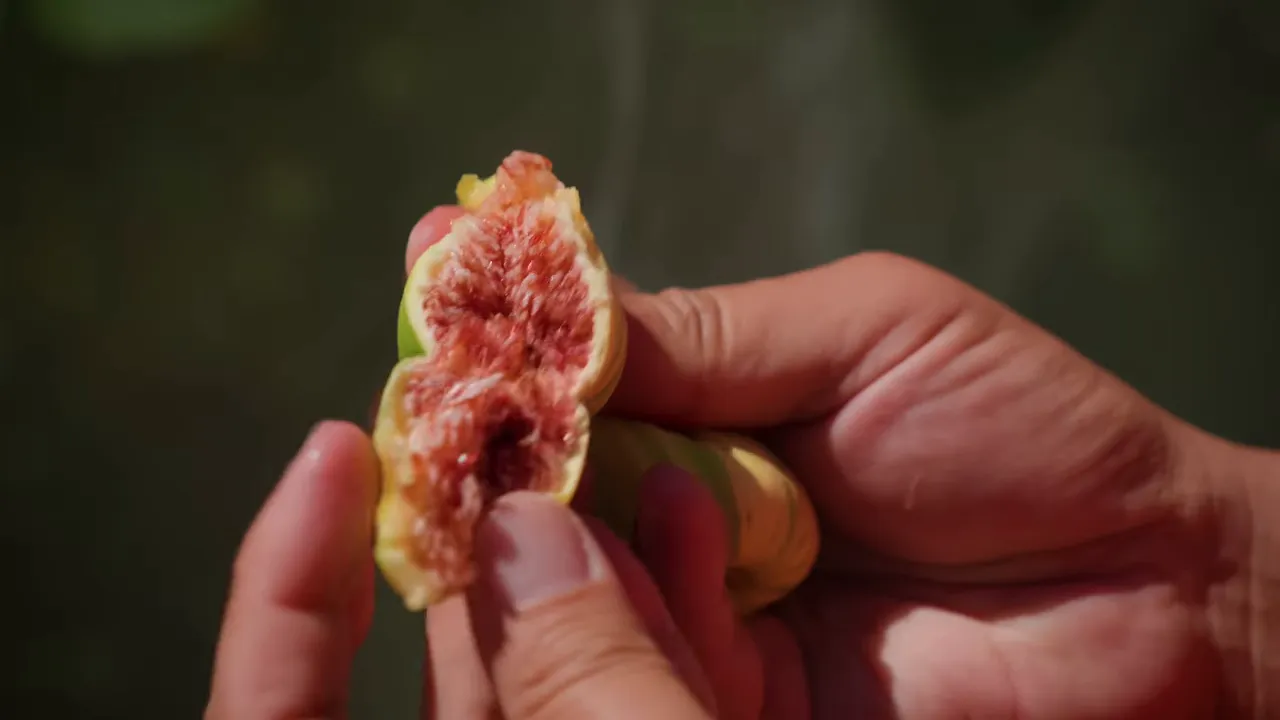
A garden can reflect your heritage
Honeysuckle is another personally meaningful planting. Jacq grows it partly for traditional Chinese uses of the flower buds in tea and soups, and partly for the fragrance that spreads through the garden when it blooms. Its growth also creates shade for future sun-sensitive plants.
Because the exact honeysuckle species is not identified here, this is a description of Jacq’s use of her plant, not a general recommendation to consume honeysuckle.
Nearby volunteer trees, which Jacq believes arrived with imported wood chips, have become a privacy screen along the canal. With enough space available, she can allow useful volunteers to develop rather than removing them automatically.
Make Room to Enjoy the Food Forest
Canopy is not only for plants. Beneath the developing White Pakistan mulberry, Jacq and Jeremy are reserving room for brick pavers, a fire ring, and a place to gather.
Another favorite spot is already in use: the fairy grape dome.
They built it by welding together an old trampoline frame, adding crosspieces for grapevines, and threading in fairy lights. The lights recall the fireflies Jacq misses from the East Coast.
The planting was also inspired by a restaurant patio in Greece, where grapes hung within reach above the dining area. Now Thompson Seedless vines create a shaded retreat at home, with protected clusters overhead.
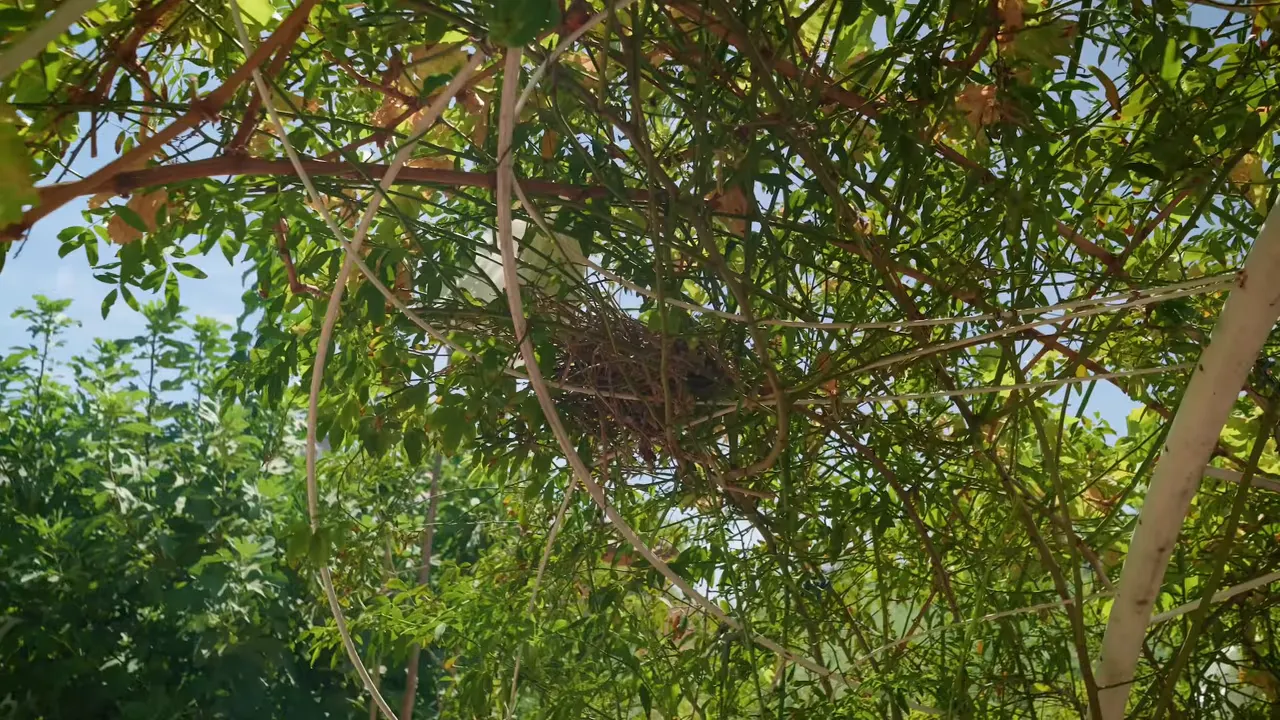
The grapes are smaller than Jacq would like, and she is still experimenting with improving their size. But they taste good, and a home harvest does not have to look like a supermarket display to be worthwhile.
Sometimes she and Jeremy bring lunch outside and spend an hour beneath the vines before returning to work. That is an important part of the design, too: leave yourself somewhere to enjoy what you are growing.
Asparagus and a Small-Space Patio Orchard
Asparagus becomes a seasonal shade layer
The asparagus beds include Jersey Knight green asparagus and a purple variety. Established around 2020 or 2021, they produce the thick spears that always make me wish I had arrived during harvest season.
After harvest, the tall fern growth takes on another role. During the first few years, Jacq grew tomatoes, peppers, and squash along the southeast side of the asparagus, using the ferns to help protect them from sun and heat.
It is another example of a food crop doing double duty: harvest first, then a useful living layer.
The patio orchard uses the same principles in less space
You do not need three-quarters of an acre to borrow these ideas. Near the house, a compact patio orchard layers shade plants, fruit trees, herbs, and groundcover in an area that originally had no irrigation.
A desert willow and a volunteer shrub help block afternoon summer sun. Within that protection are Mexican key lime, Cara Cara orange, Indian jujube, loquat, Mexican oregano, and chiltepin pepper.
A surprisingly large dusty miller adds silvery contrast. Jacq bought it as a small one-gallon plant at a Desert Botanical Garden spring plant sale, looking for something that could handle a particularly dry spot. It grew far beyond her expectations.
The important lesson is the arrangement, not simply the plant list. Taller plants intercept harsh sun, while smaller edible plants occupy the sheltered spaces they create.
A Kitchen Garden That Feeds People and Pollinators
The original raised bed, built soon after the move, remains productive within the larger food forest. Basil, cherry tomatoes, eggplant, and watermelon grow alongside mint, with seed heads remaining from winter lettuce.
Apple mint spreads as a living groundcover, supplying leaves while helping shade the soil. Volunteer evening primrose turns the area pink in spring. Later, mint flowers supply nectar and pollen for bees and other beneficial insects.
Gregg’s mistflower brings butterflies. Jacq describes mornings with clusters of them fluttering among the flowers, which sounds like a pretty wonderful reason to step outside.
A substantial culinary bay plant adds another edible shrub layer. Positioned on the hot northwest side, it also helps protect the vegetable garden from afternoon summer sun. There is enough bay leaf for far more than one household.
All of these layers make the garden more than a collection of crops. It provides food, flowers, habitat, fragrance, and protection in the same space.
Preserve the Harvest, Share the Abundance, and Keep Adjusting
With this much food growing, harvest management becomes part of gardening. Jacq and Jeremy preserve what they can and share or trade what remains.
Mulberries are a good example. Their short, abundant season has led to freezing, jam-making, and, more recently, freeze-drying. Freeze-dried Shangri-La mulberries make a topping for vanilla ice cream or oatmeal and offer another way to enjoy the crop later.
Neighbor-to-neighbor trading extends the variety of food available without requiring everyone to grow everything. One recent exchange paired their figs with a neighbor’s peppers and eggplants.
Jacq hopes that as nearby gardens become more productive, the neighborhood might eventually host a small cul-de-sac farmers market. It could include extra produce and opportunities for children to participate with their own sales. That is still a possibility, not an established market, but it grows naturally from the relationships already forming around food.
What stays with me most about Epic Yard Farm is Jacq’s willingness to change course. Even after years on the property, she is still adjusting the design as plants reveal what works and what does not.
You do not have to know everything before you begin. Notice where frost settles. Notice which plants shade the soil, where fruit struggles, and which experiments thrive. Then let those observations guide the next planting, pruning decision, or change in plan.
A desert food forest does not become successful because the original design was perfect. It develops through the attention you give it, season after season.


