Bucketfuls of blooms and beautiful bouquets are possible in Arizona’s low desert. You don’t need a huge garden, either. I grow cut flowers in raised beds, containers, and throughout my landscape.
The system is simple: grow a mix of flowers that work together, plant them in the right season, and give each type the support and care it needs. A little planning now can mean flowers to cut for months.
Key Takeaways
- Grow focal flowers, spikes, discs, fillers, and foliage for more complete homegrown bouquets.
- Plant cool-season flowers in fall and warm-season flowers in spring in Arizona’s low desert.
- Add support early, and pinch only the flower types that benefit from branching.
- Learn each flower’s harvest stage, then refresh vase water and recut stems every few days.
Table of Contents
- Plan for the Five Flower Roles in a Bouquet
- Plant in the Right Season for Arizona’s Low Desert
- Choose a Simple Color Palette
- Group Tall Flowers Together and Add Support Early
- Pinch the Right Flowers for More Stems
- Keep Watering, Mulching, and Feeding Simple
- Harvest at the Right Stage
- Arrange a Bouquet One Layer at a Time
- My Fall Cut Flower Garden Plan
- Choose Cut Flower Varieties, Not Just Bedding Plants
- Keep Notes and Build on What Works
Plan for the Five Flower Roles in a Bouquet
When I plan a cut flower garden, I think about roles, not just individual flowers. Focal flowers, spikes, discs, fillers, and foliage each bring something different to a vase. Growing a variety gives you more options when it’s time to arrange.
Focal Flowers: The Stars of the Bouquet
These are the blooms you build an arrangement around. My favorites include lisianthus, sunflowers, zinnias, roses, Iceland poppies, daffodils, tulips, anemones, ranunculus, and dahlias.
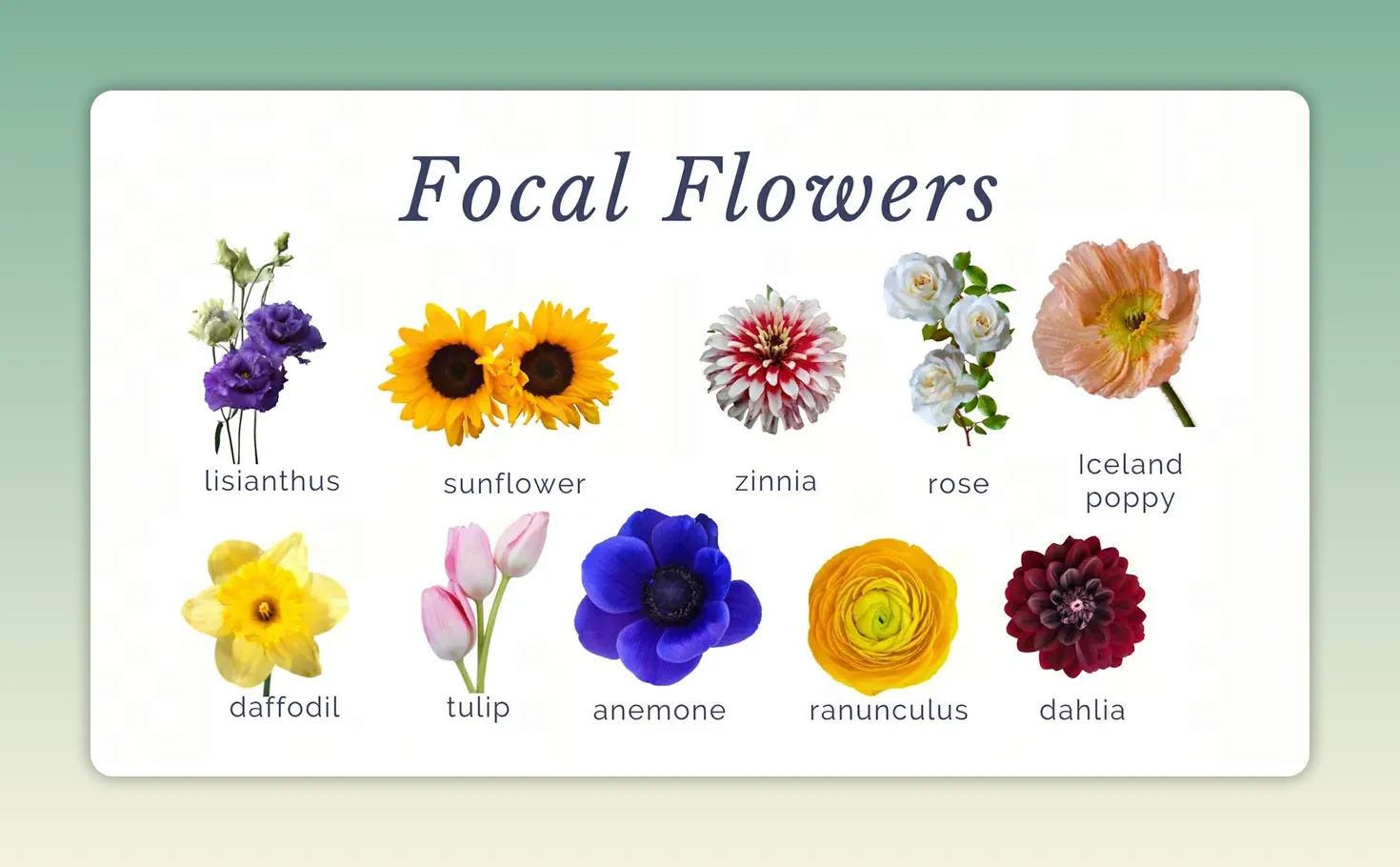
You don’t need to grow every one. Choose favorites that fit your planting season and color palette, then round out the garden with flowers in the other roles.
Spike Flowers: Height and Drama
Spikes draw the eye upward and add height to an arrangement. I grow different types as the seasons change:
- Cool-season favorites: Foxglove, delphinium, snapdragons, stock, sweet peas, and campanula.
- Warm-season favorites: Amaranth, celosia, salvia, and bee balm.
Disc Flowers: Pulling Everything Together
Disc flowers help tie the vase together. There are so many good choices: cosmos, rudbeckia, marigolds, phlox, daisies, echinacea, long-stem pansies, strawflower, gaillardia, and calendula.
Filler Flowers: The Bouquet Makers
Don’t overlook the fillers. These are the plants that help turn a handful of flowers into a full arrangement. One productive plant can provide enough stems for lots of jars.
I like gomphrena, Dara, coral vine, cornflower, feverfew, statice, verbena, baby’s breath, and scabiosa.
Foliage: The Finishing Touch
Even a few stems of greenery can make a bouquet feel finished. Artemisia, dusty miller, basil, eucalyptus, lemon verbena, mint, oregano, and perilla add texture as well as foliage.
These plants don’t all need a spot in a dedicated cut flower bed. Grow them where they fit throughout your yard. Some provide greenery year-round in my garden.
Plant in the Right Season for Arizona’s Low Desert
Timing matters as much as flower choice. I plan around two main planting windows: fall for cool-season flowers and spring for warm-season flowers. These are broad seasonal groups, so check the individual planting guidance for each flower before planting.
Fall Planting for Late Winter and Spring Blooms
Fall is when I plant many of the flowers that fill the garden and my vases in late winter and spring:
- Ranunculus and anemones
- Snapdragons and stock
- Foxglove and delphinium
- Feverfew, Dara, and scabiosa
- Sweet peas
- Pre-chilled tulips and daffodils
Spring Planting for Warm-Season Bouquets
In spring, I switch to warm-season workhorses: sunflowers, zinnias, cosmos, gomphrena, marigolds, and amaranth. Basil is one of my favorite warm-season choices for foliage.
Planning for both seasons gives you a different set of flowers to enjoy as conditions change, rather than trying to grow everything at the same time.
Choose a Simple Color Palette
A smaller color palette makes arranging much easier. When the flowers already look good together, you’ll use more of what you grow.
Last season, I loved Bix sweet peas with Hestia ranunculus. I’m planting that combination again and adding more flowers in peachy pinks, soft orange, and white.
You can use the same approach with your favorites. Start with a combination you love, then choose the rest of your flowers to complement it. Keep it simple.
Group Tall Flowers Together and Add Support Early
Some cut flowers need help staying upright. I group those plants together so I can support the entire bed with horizontal trellis netting. Self-supporting plants can go elsewhere in the garden or into containers.
Install support soon after planting, rather than waiting until stems are tall and leaning.
- Place the first layer of trellis netting about 8 to 10 inches above the soil.
- Add a second layer about 16 to 18 inches above the soil.
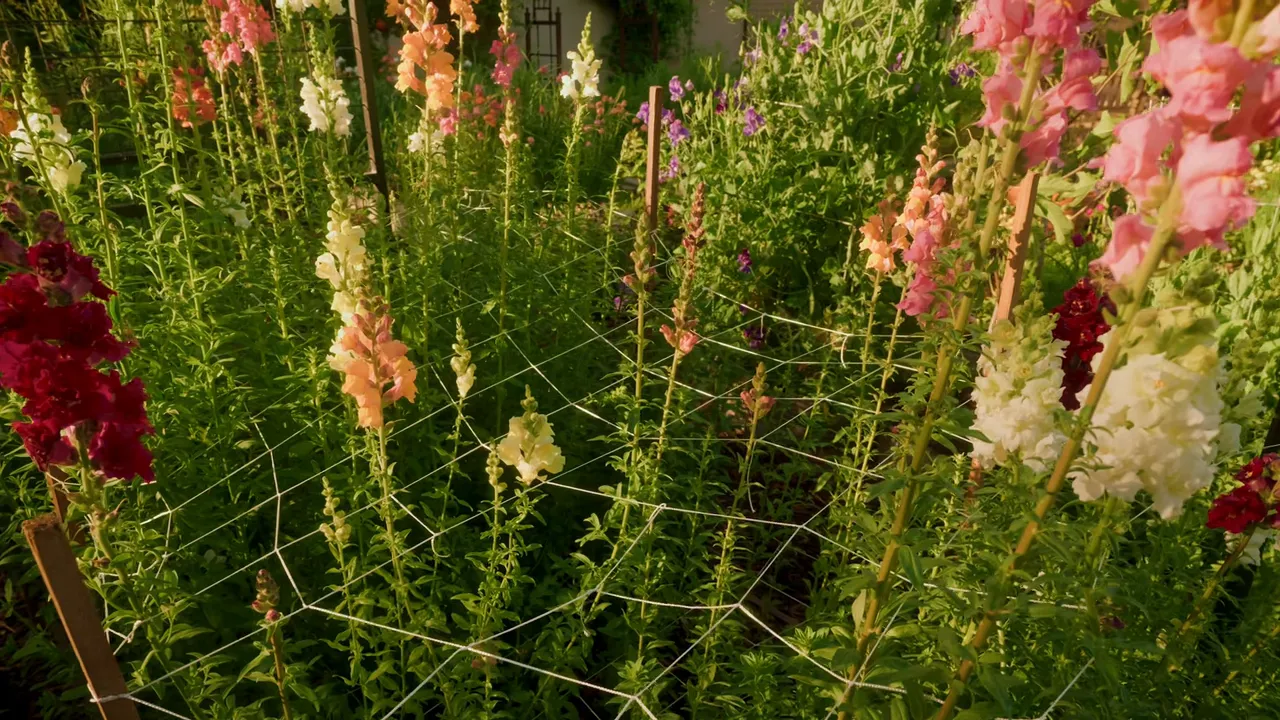
My must-support list includes lisianthus, delphinium, snapdragons, stock, campanula, feverfew, Dara, scabiosa, cosmos, and cornflower.
You don’t need a whole bed of netting for a few plants. A bamboo stake can support a single plant, and a peony cage can work for a small group. Sweet peas need a trellis to climb, rather than horizontal netting alone.
Pinch the Right Flowers for More Stems
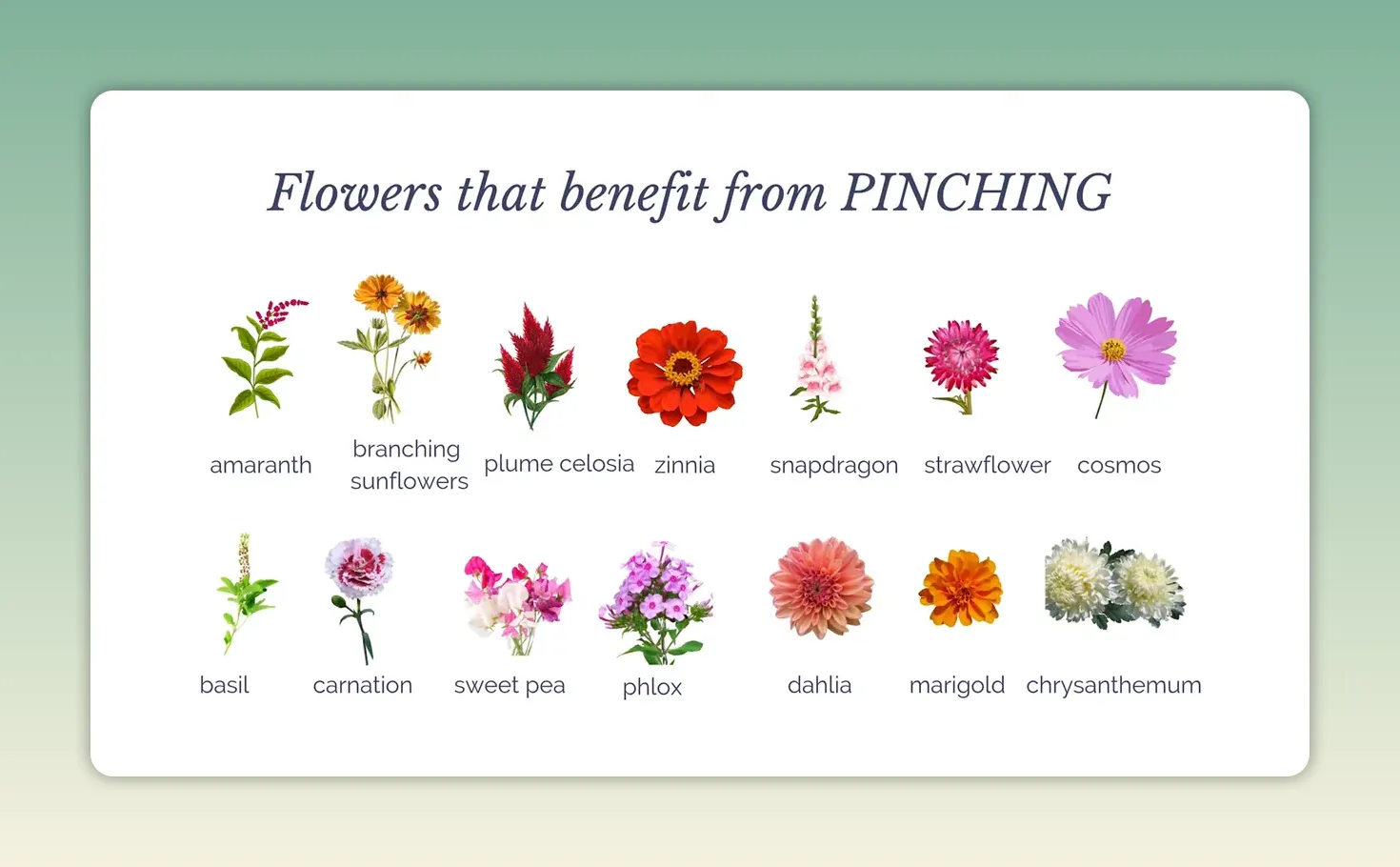
Pinching means removing the growing tip to encourage branching. You’re trading one early stem for more stems later. For flowers that respond well to it, this simple step helps you get more blooms from each plant.
Don’t be afraid to pinch, but do check which type of flower you’re growing. Not every plant benefits.
Flowers I Pinch
- Amaranth
- Branching sunflowers
- Plume celosia
- Zinnias
- Snapdragons
- Strawflower
- Cosmos
- Basil
- Carnations
- Sweet peas
- Phlox
- Dahlias
- Marigolds
- Chrysanthemums
Flowers I Don’t Pinch
- Statice
- Dara
- Pansies
- Single-stem sunflowers
- Foxglove
- Delphinium
- Anemones
- Ranunculus
- Annual scabiosa
- Stock
The sunflower distinction is especially important: branching sunflowers are on my pinch list; single-stem sunflowers are not. Learn the specific pinching guidance for your flowers rather than treating every seedling the same way.
Keep Watering, Mulching, and Feeding Simple
Cool-season cut flower care doesn’t need to be complicated. I add 1 to 2 inches of mulch and check soil moisture every three or four days during the cool months.
That’s a checking schedule, not an automatic watering schedule. I water when the top couple of inches of soil are dry. The goal is even moisture, not soggy soil. Too much water can slow growth.
As needed, I feed every few weeks with a low dose of a bloom-friendly fertilizer. Beds amended with compost and worm castings before planting may not need much additional fertilizer.
For summer flowers, I increase watering and use a thicker layer of mulch. Adjust care as the season changes rather than keeping the same routine all year.
Harvest at the Right Stage
Longer-lasting bouquets begin with harvesting each flower at the right stage. There isn’t one harvest rule that works for everything in a mixed cut flower garden.
Get to know the flowers you’ve chosen. For each one, learn:
- When to plant it in your climate
- Whether it needs pinching
- What kind of support it needs
- The best stage to cut it for the vase
I have flower growing guides and low desert planting information to help with those details. Learning the specifics for a few favorites is more useful than guessing your way through a long list of unfamiliar flowers.
Arrange a Bouquet One Layer at a Time
Arranging can feel overwhelming after you’ve put so much care into growing the flowers. Don’t let this part intimidate you. Lay out your stems by type, then build the bouquet in a simple order:
- Start with focal flowers. Use these as the starting point for the arrangement.
- Add a ring of foliage. Bring greenery around the focal blooms.
- Tuck in discs and spikes. Add the flowers that tie the arrangement together and give it height.
- Finish with filler. Fill out the bouquet with smaller flowers and texture.
Once the flowers are in the vase, change the water and recut the stems every few days to help them last longer.
My Fall Cut Flower Garden Plan
Here’s how I’m putting the five flower roles to work in my own fall planting. You can use this as a starting point, then adjust it to your space and favorite colors.
- Focals: Ranunculus, Iceland poppies, daffodils, and anemones.
- Spikes: Snapdragons, delphinium, sweet peas, and foxglove.
- Fillers: Feverfew, Dara, and scabiosa.
- Discs: Long-stem pansies, Shasta daisies, and rudbeckia.
- Foliage: Eucalyptus, artemisia, oregano, and lemon verbena.
Those foliage plants live year-round for me, so they’re already part of the garden when seasonal flowers are ready to cut. Don’t feel limited to a formal foliage list, either. Look around your yard for greenery to try in your arrangements.
Choose Cut Flower Varieties, Not Just Bedding Plants
When you buy seeds or plants, look specifically for cut flower varieties. This is especially helpful with flowers like stock and snapdragons. Cut flower types are taller than the compact bedding plants commonly sold at nurseries.
You may need to order plugs online from a specialty supplier such as Farmer Bailey, or buy seeds from a supplier such as Johnny’s Selected Seeds and start them indoors. Choosing the right variety from the beginning makes a difference when your goal is stems for bouquets.
Keep Notes and Build on What Works
Take pictures throughout the season and write down what you loved. Record the combinations you want to repeat, along with the flowers that worked well in your space.
Each season, keep the successes and try one or two new things. You don’t have to grow everything at once to have a beautiful cut flower garden in the desert.
Plant a little beauty, learn as you go, and the bouquets will follow.


