It feels so good to be back in the garden.
After being diagnosed with stage 4 pancreatic cancer this summer, I stopped almost everything. Classes, filming, most of my gardening. For a while, I didn’t know what treatment or everyday life would look like.
Now I have a little more clarity, and I’m slowly bringing back the things I love. Here in Mesa, Arizona, the temperatures are finally cooling down. Some fall vegetables are planted, flowers are on their way, and plenty of beds are still waiting. I’m learning to be okay with all of it.
This garden isn’t completely planted or perfectly tidy. But it is full of life, and there is so much to look forward to.
What Survived a Very Wild Summer
One of my beds still looks like much of the garden looked all summer: the Wild West. Basil, gomphrena, and sweet potatoes have spread into one another, and everything is doing its own thing.
The bees and butterflies are very happy about that.
Even when I wasn’t able to do much gardening, I could come outside and find flowers covered with pollinators. The garden was still full of life, even without much attention from me. Since I’m not ready to plant anything else in that bed, I’m leaving it alone for now.
Not every bed needs to be cleared at the same time. I’m transitioning the garden a little at a time and enjoying what is still growing.
Planting Carrots and Making a Plan for Nematodes
A little experiment with shredded wool
I usually cover newly planted carrot seeds with burlap to help keep the surface moist while they germinate. This time, I couldn’t find my burlap. I have no idea where it went.
What I did have was shredded wool, so I tried that instead.
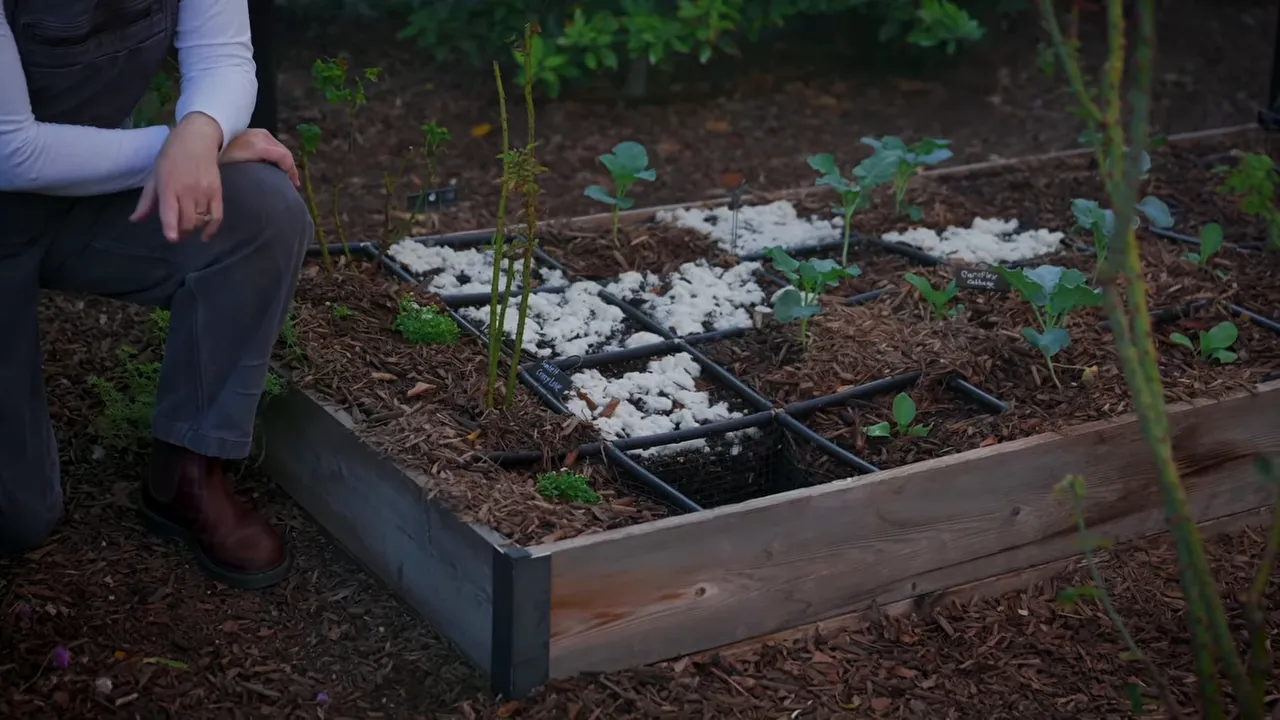
I’m hopeful about this experiment for a few reasons:
- The wool holds moisture around the seeds.
- My hope is that the seedlings can grow through it, so I won’t need to pull it back.
- As it breaks down, it can provide a slow release of nutrients.
It’s still an experiment, not a finished success story. I’m excited to see how the carrots do.
What the roots told me
In another bed, tomatoes struggled earlier in the season. When I pulled them out to investigate, their roots were covered in galls, little swollen areas all along the roots. I checked roots from other crops in the same bed and found the same problem.
That was my clue that I was dealing with root-knot nematodes.
I planted the bed with marigolds over the summer as part of my plan to address the problem. When my sons came to help in the garden, they cut the marigolds back, left the chopped plant material in place, and topped the bed with compost.
Now I’m giving that material a little time to break down. My plan is to follow it with garlic and leeks, which I’m choosing as more nematode-resistant options for this bed.
I’m hopeful that this combination will help, but I’ll need to see how the next crops perform. For help identifying the problem and understanding management options, the University of California’s root-knot nematode guide is a useful reference.
Mahogany Splendor Has Been a Bright Spot
One of the real highlights of the summer has been Mahogany Splendor. It has grown right up to the shade cloth, and that beautiful red foliage has been such a bright spot among the chaos.
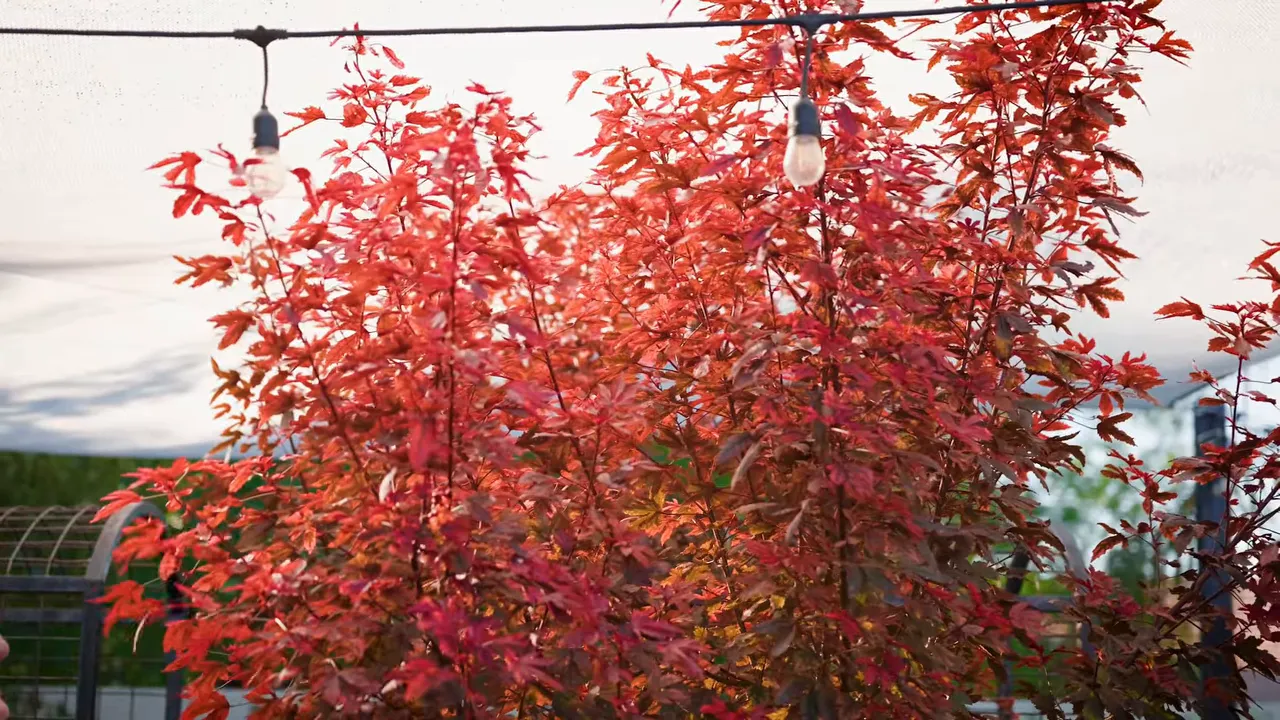
There is one thing to know about it: the branches are brittle. After windstorms, I’ll sometimes find broken branches on the ground. But the plant itself has been resilient. Wherever I cut it back, it keeps growing.
Mahogany Splendor is in the same family as okra and roselle. In my garden, I’ve had better luck carrying it through winter than either of those plants. I’ve had it live for more than a year, so my plan is to leave this one where it is and keep enjoying it.
That foliage is about as close as I’m going to get to a Japanese maple here in Mesa. I love it.
Getting Established Roses Ready for Fall Blooms
My summer goal for roses is simple: survive. That’s all I’m asking during the worst of the heat.
Once nighttime temperatures dropped into the 70s and I started seeing new growth, I knew it was time to give my established roses some attention for fall.
Here’s what I did:
- Pruned the plants. I removed diseased, damaged, and crossing branches. I may have gotten a little enthusiastic with the pruning, but I think they’ll be fine.
- Removed unhealthy foliage. Dead, crunchy, or suspicious-looking leaves came off.
- Cleaned up underneath. I removed the fallen leaves and debris rather than leaving potentially diseased material on the ground.
- Fed the roses. I added compost, worm castings, Nutrient Plus, and rose fertilizer.
These roses have been in the ground for a couple of years, and it’s nice to see them becoming more mature. There’s already new growth coming in, and I’m hoping for a beautiful fall flush of blooms.
Newly planted roses need a gentler approach. If yours are just getting established, hold off on pruning and be careful with fertilizer. They don’t need a lot right away. Give them time to ease into their new home.
Turning Overwhelming Beds Into Future Flower Beds
One part of the garden felt especially overwhelming this summer. It was hot, I didn’t feel well, and the cover crops had grown so tall that I would come outside, look at the work, and turn around and go back indoors.
My sons helped change that.
I had sunn hemp growing in two beds, nearly to the tops of the supports. They cut it off at the base, laid the tops back into the beds, and covered everything with compost. We left the roots in place.
This is how I used the sunn hemp as a chop-and-drop cover crop:
- Cut the plants at the soil surface.
- Leave the roots in the bed.
- Lay the cut stems and leaves over the soil.
- Top the plant material with compost.
- Let the beds rest while the material begins breaking down.
When I pulled back a little compost, the sunn hemp was already decomposing, and I found worms underneath. Good things were happening. That was enough for me to leave it alone and let the process continue.
Nitrogen nodules are not root-knot nematode galls
Before leaving all the roots in place, I pulled a couple of sunn hemp plants to check for nitrogen-fixing nodules. They were there, which was exciting to see.
Those beneficial nodules are different from the root-knot nematode galls I found on the struggling crops. Both involve something noticeable on the roots, but they do not mean the same thing. Sunn hemp can help fix nitrogen from the air, and I’m happy to have those roots remaining in the soil.
These prepared beds will become cut-flower beds once my plugs arrive from Farmer Bailey. I’m planning flowers across three beds, with horizontal trellis netting supported by the frames already in place.
Having help with the cutting and compost made such a difference. Instead of wondering how I could possibly get through all the work, I can look forward to the fun part: planting the flowers.
A Changed Corner of the Garden
There’s an open area now where my chicken coop used to be.
We lost our last chickens over the summer after returning from vacation. I was so sad. We decided to remove the coop and pass it along, and my nephew, who raises chickens, was happy to have the supplies.
Then I received my diagnosis. As much as I missed the chickens, I also felt relieved not to have animals outside depending on me during the intense heat. It was a difficult change that also removed a responsibility at a time when I needed that.
We’ve added coral vine along the fences, moved the barrels, and made room for a bench. Now it’s becoming a quieter place to sit with my tea in the morning and enjoy the garden.
Vines, Roselle, and Flowers Full of Butterflies
Purple hyacinth bean vine is hitting its stride
The purple hyacinth bean vines have been another highlight. I have several around the yard, and they are climbing and blooming beautifully.
They can take a little while to get going, but right now they’re really coming into their own. Those flowers will form pods, and I’ll be able to save seeds for another season.
Waiting for roselle
My roselle is enormous, with big branches and plenty of growth, but no flowers yet. It’s growing in a container with a trellis for support, and it blends right into the little ultra-dwarf apple tree beside it.
I keep looking for those first blooms. Once it flowers, I can look forward to harvesting the fleshy calyces for hibiscus tea. A slice of orange in a cup of roselle tea is one of my favorite things.
Gregg’s mistflower is worth the space
I can’t talk about the garden right now without mentioning Gregg’s mistflower. The queen butterflies love it. The plant provides compounds they use in producing mating pheromones, which is part of the reason it draws them so strongly.
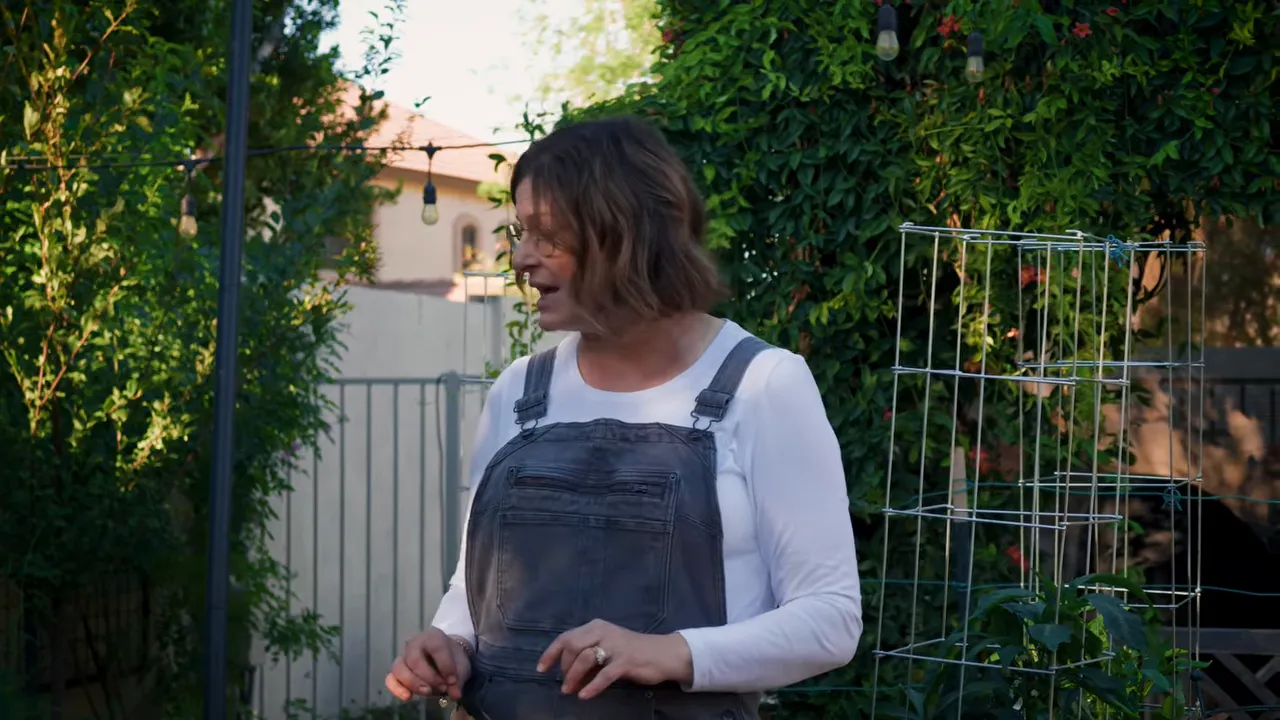
My grandson was in town for about three weeks, and many mornings we spent time together beside this plant, enjoying the butterflies. Sometimes there are dozens swirling around. It’s magical.
One plant has spread through much of its raised bed, and I’m not sorry about it. I love it enough that I’ve planted more in other parts of the garden.
Gregg’s mistflower blooms through much of the year here and has been very forgiving about being cut back, whether a little or a lot. Nearby sky flower and gomphrena also attract butterflies, making this whole area such a happy place to spend time.
Why I’m Growing More Cool-Season Flowers in Containers
As temperatures come down, I’m bringing the smaller containers back into use. I fill many of my raised beds with vegetables, but I love putting flowers in pots throughout the garden.
Some containers are already planted with poppies and primrose, which is new for me. There’s salvia nearby, and I’ve sown trailing nasturtiums that I hope will spill over the edge of a large pot. One of my favorite fragrant pink roses is growing in this area, too. It should be beautiful before long.
My sons helped bring out the containers, and my mom came over to help fill them. We added soil and ollas, the buried clay watering pots. A couple of containers still need attention, but most are ready for cool-season flowers.
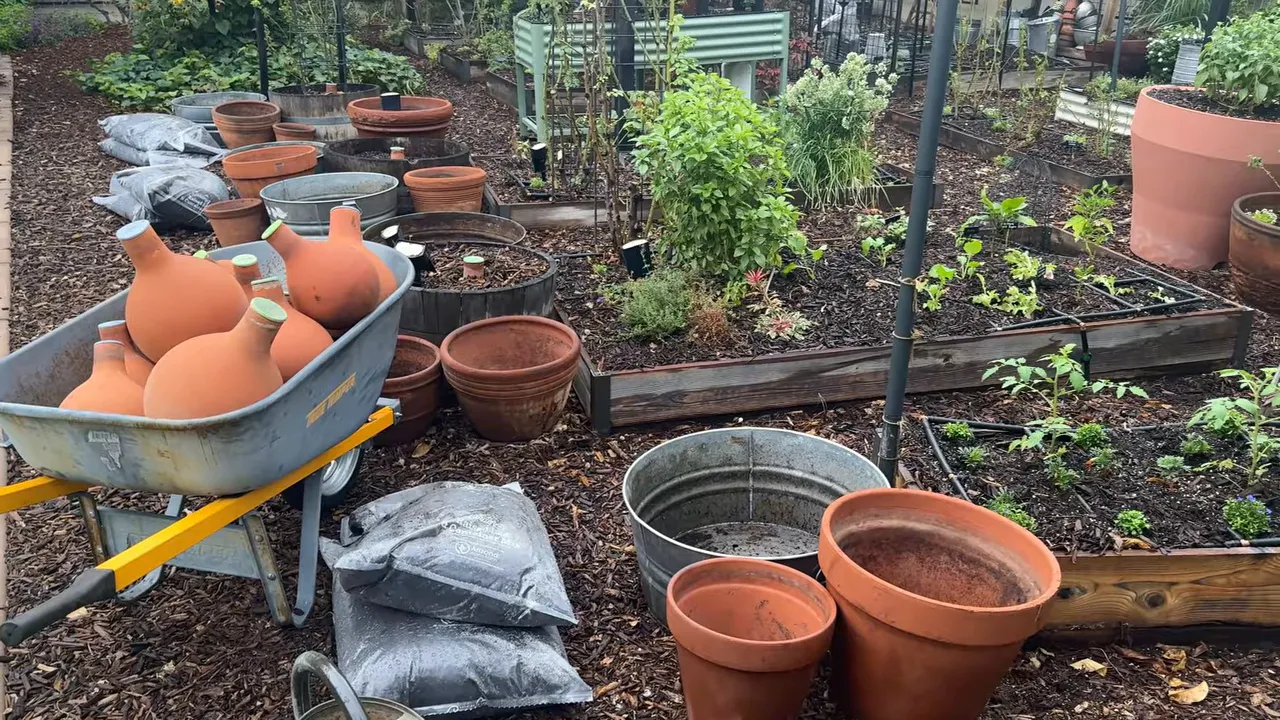
I’m looking forward to ranunculus, anemones, and all those flowers that make the cool season so special.
The biggest advantage of growing these flowers in containers is flexibility in spring. Often, they’re still blooming beautifully when it’s time to plant spring vegetables. If they’re occupying a vegetable bed, that can create a difficult decision.
In containers, I can leave them alone. I can enjoy the last blooms and let the foliage and corms finish their cycle without delaying the vegetable garden.
Some of these pots look empty right now. What I see is everything that’s still to come.
Fall Vegetables and a Favorite Cherry Tomato
Two of my most reliable beds are planted with vegetables because I am very ready to bring fresh organic produce into the kitchen again.
Growing in these beds now are:
- Cabbage and broccoli
- Carrots, including a bed I believe is all King Midas
- Peppers and rapini
- Radishes and cilantro
There’s a lot to look forward to harvesting.
A compostable trellis for Sungold tomatoes
Sungold tomatoes are a family favorite, especially for my 15-year-old. He doesn’t have much interest in most other tomatoes, so these are something we have to grow.
I planted them about a month before this fall garden update, and they’ve taken off. Installing their trellis is now firmly on my to-do list. Really, it’s a little overdue.
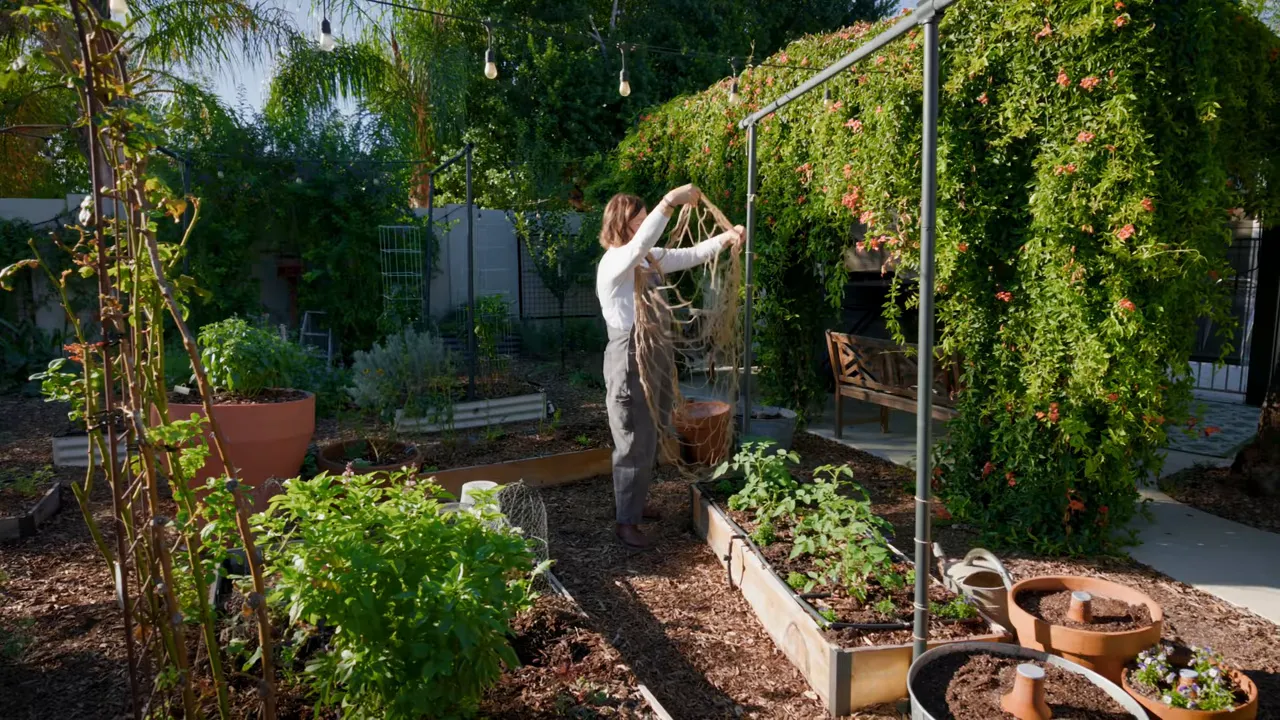
I’m using compostable trellis netting tied to the frame with jute. For sprawling cherry tomatoes, I like being able to tuck the growing stems into and around the netting as they grow.
I’ve also planted French marigolds with the hope of helping with whiteflies, along with lobelia for color. Orange and purple flowers with golden tomatoes should make a pretty combination. A little nod to the Phoenix Suns, perhaps.
My Cancer Treatment Update
The side-yard garden grows a little more slowly than the rest of the yard. Right now, that slower pace feels like a relief.
When I received my stage 4 pancreatic cancer diagnosis this summer, I was overwhelmed. I canceled classes, filming, everything. I needed time to understand what was happening and what treatment would involve.
At the time of this update, I’m participating in a clinical trial with an investigational oral medication. I take my treatment at home each day and go to Mayo Clinic about every other week for observation and testing. I’m very grateful to have this opportunity.
For me, the side effects have been fairly manageable. I have a rash that I don’t love, and some days the nausea is harder than others. I’ve also been able to keep my hair.
My energy is different, though. After my walk, I may need to rest before coming out to the garden. Then I garden for a little while, rest again, and do a little more when I can.
I’m still able to do things I love. I just need to do them more slowly.
I’ve started adding work back very intentionally, including filming in the garden and teaching a few classes. I’ve taught again at Arizona Worm Farm and SummerWinds, and it has felt so good to return to something I genuinely love.
Even an ordinary job like mulching a garden bed feels meaningful in the middle of everything that has happened.
The Raised Beds That Friends and Family Helped Fill
The tall raised beds in the side yard sat empty all summer. I wasn’t even sure how much I would like them, and the thought of filling them felt impossible.
So I asked my son’s church youth group for help.
Arizona Worm Farm delivered the soil. Then a group of young men and their leaders came over and, in an afternoon and evening, filled the bottoms with logs, added branches, and filled the beds with soil.
What had felt completely beyond me was suddenly done. It felt like a miracle.
Once the beds were ready, I could plant the seedlings I’d started indoors over the summer. Somehow, I had kept them alive. That little indoor project became something I could bring out into the garden.
Then the birds discovered them.
Swiss chard and calendula seemed especially popular, so I’ve been covering some plants with upside-down dollar-store mesh wastebaskets. They’re a simple way I’m protecting those little plants while they get established.
Learning to Do One Job and Ask for Help
I can’t do everything I used to do in a day. I’m learning to accept that.
It’s okay to come outside and do one job. Cut back an herb. Plant a few seedlings. Add mulch to one small area. There may still be plenty left undone when I go back inside.
It’s also okay to ask for help, even when asking is hard.
My family has stepped in so generously. As my sons worked alongside me, they started asking how I had been doing all of this myself. It was sweet to see them understand a little more of what goes into caring for the garden.
I love that work. I’m just adjusting how it gets done.
There Is Still So Much to Look Forward To
Teaching gardening online can sometimes feel lonely. I’m not always around other people, and it can be easy to feel as though I’m doing this work on my own.
Sharing my diagnosis has shown me how untrue that is.
The prayers, messages, meals, cards, and kindness have been overwhelming in the very best way. People I’ve never met have reached out or stopped to tell me they’re praying for me. I feel that support every day.
When I returned to teach at Arizona Worm Farm, I noticed purple shirts as we pulled up. Purple is the pancreatic cancer awareness color, and staff members, including Zach and his wife, had worn purple to support me.
Of course, I cried. It meant the world.
My husband and I have hope. We’re hopeful about the treatment, grateful for our family, and grateful for everyone walking alongside us.
I still have so much I want to teach and do. Right now, there are cooler mornings, fall vegetables, winter flowers, and beds full of possibility ahead of me.
I’m so happy to be back in the garden.


