Fruit trees are a big commitment in a small yard. You can spend years caring for one, only to discover it gets too large, needs more work than you expected, or produces fruit you don’t really enjoy. That makes a tree that earns its space especially exciting.
My Barbados cherry has been one of those surprises. It started producing within a year, handles the hot western exposure in my desert garden, and stays green beside our seating area. This year, it’s loaded with fruit.
I planted several smaller fruiting options along this west-facing edge: two ultra-dwarf Anna apples, guavas, a fig, goji berry, grapes, and Barbados cherry. The grapes have done well, too. But the Barbados cherry has stood out for its combination of fruit, good looks, and fairly simple care.
Key Takeaways
- Barbados cherry is self-pollinating, so one tree can produce fruit in a small garden.
- Good sunlight, excellent drainage, and thick mulch are central to my low desert care routine.
- Prune after frost danger passes to maintain a manageable shape and easy harvesting height.
- Harvest red fruit regularly and eat, refrigerate, or freeze it promptly because it keeps poorly.
Table of Contents
- Why Barbados Cherry Works in a Small Desert Yard
- Buying and Planting Barbados Cherry
- Growing Barbados Cherry in a Container
- Flowers and Fruit Through the Warm Season
- Pruning for Shape and Easy Harvesting
- My Watering and Feeding Routine
- Pests to Keep an Eye On
- Harvesting, Storing, and Enjoying the Fruit
- Would I Plant Barbados Cherry Again?
Why Barbados Cherry Works in a Small Desert Yard
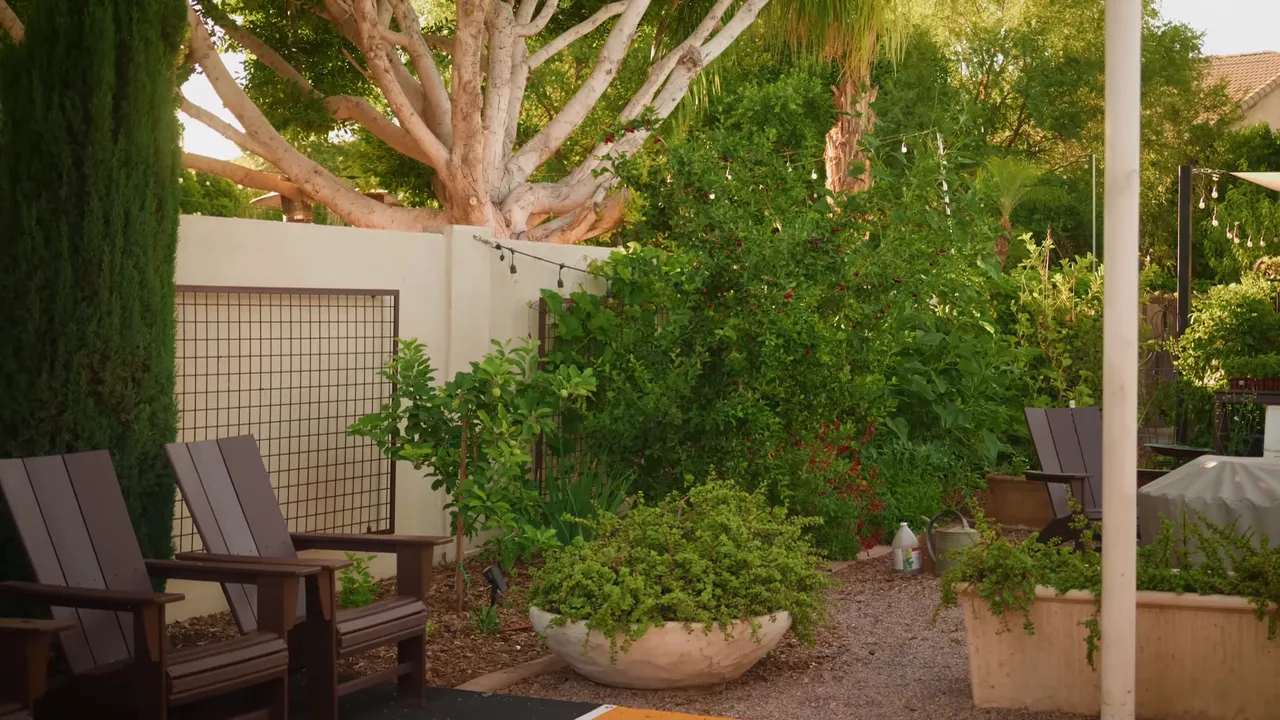
Barbados cherry, also called acerola, grows more like a subtropical fruiting shrub or small tree than a traditional orchard tree. It can reach about 10 to 12 feet tall and wide, but it’s forgiving about pruning. I keep mine at a size I can harvest without getting out a ladder.
It’s also self-pollinating, so you only need one tree to get fruit. When garden space is limited, not having to make room for a second pollinating tree is a real advantage.
In my yard, it stays evergreen and doesn’t drop many leaves. That makes it a nice fit near a seating area, where I want something attractive year-round rather than bare branches for part of the year. The main mess comes from ripe fruit falling, which is a pretty good reason to keep harvesting.
Where it grows best
Barbados cherry grows best in USDA Zones 9 to 11. If you’re unsure of your zone, the USDA Plant Hardiness Zone Map is a useful starting point.
Warm-climate suitability doesn’t mean it’s immune to cold. Young plants are particularly frost-sensitive and need protection during freezes, especially through their first couple of winters. In colder climates, a large container gives you the option to move the plant to a protected location.
Buying and Planting Barbados Cherry
You can grow Barbados cherry from seed, but seedlings may differ from the parent plant. If fruit quality is your priority, look for a named variety or a plant propagated from cuttings.
Local nurseries that carry tropical and subtropical fruit plants are a good place to look. Barbados cherry is becoming more popular and easier to find.
I bought mine in a 5-gallon container. When I took it out, the roots had completely circled the pot. After working those long roots loose, I honestly wondered whether the tree would survive. It did just fine, and it has more than made up for that uncertain beginning.
Give it sunlight, but help it get established
Barbados cherry needs good sunlight to produce fruit. Mine gets western exposure, so an established plant can clearly handle some very hot conditions in my low desert garden.
A newly planted tree is a different story. Keep a closer eye on it, give it more attention to watering, and provide extra shade as needed while it gets established. The ease I’ve experienced with mine came after that settling-in period.
Make drainage the priority
Good drainage is the most important part of choosing a planting site. Before planting, fill the hole with water and make sure it drains. Barbados cherry tolerates different soil types, but it needs that water to move through.
I don’t load the planting hole with compost and other amendments. I want the roots to spread into the surrounding soil, not stay in one little pocket of enriched soil.
Instead, I add compost and worm castings on the surface. That feeds the soil around the plant and supports the wider area where I want the roots to grow.
Finish with a thick layer of mulch
Here in the low desert, mulch is an important part of caring for the soil. After planting, add a 3- to 5-inch layer of mulch and replenish it as it breaks down.
Mulch protects the soil and contributes organic matter as it decomposes. It’s one of the simplest ways I help this tree through our growing conditions.
Growing Barbados Cherry in a Container
If planting in the ground isn’t an option, Barbados cherry can do well in a large container. Choose the largest one you can reasonably manage. A whiskey barrel is the kind of size I would consider.
Mine grows in the ground, which I find easier in the desert. Containers come with a few extra challenges:
- They dry out faster than in-ground soil.
- They heat up more quickly in summer.
- A frost-sensitive plant can be more vulnerable to cold in a container.
The trade-off is flexibility. In a colder climate, being able to move the tree somewhere protected may make container growing the better choice. Just plan for both the container’s size and how you’ll protect it.
Flowers and Fruit Through the Warm Season
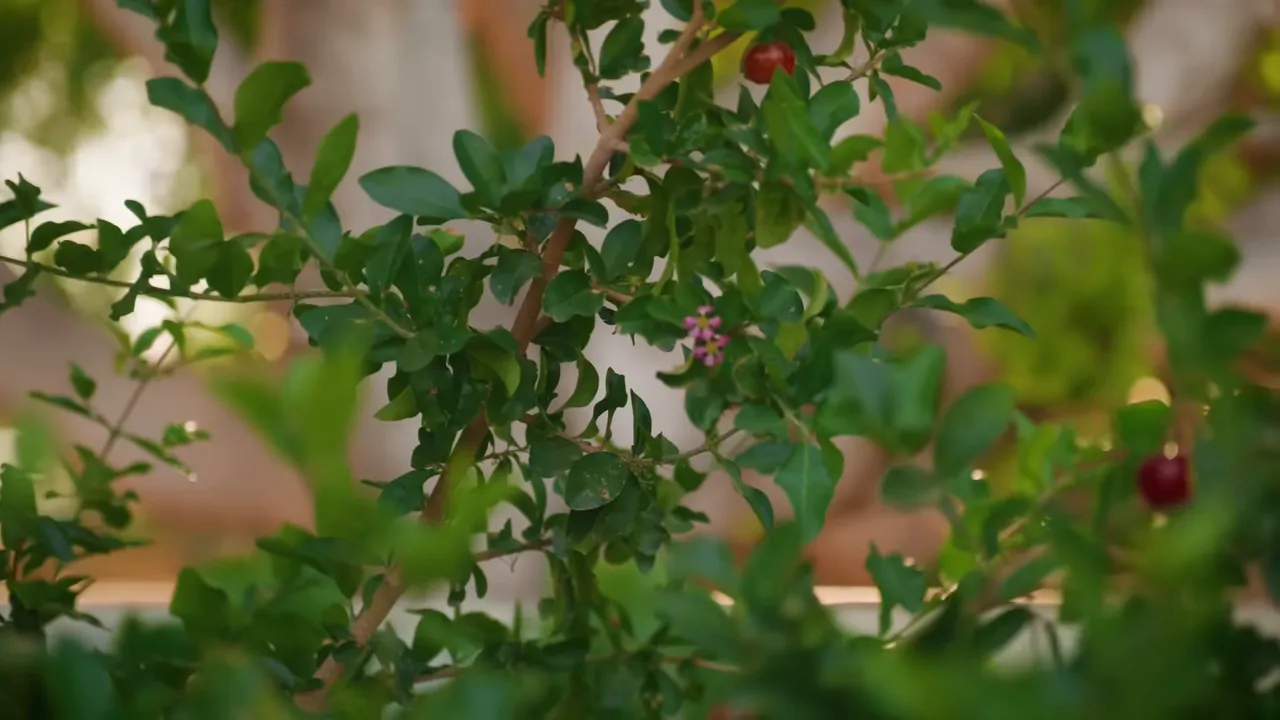
One of the biggest surprises has been how readily my tree produces. It began fruiting within a year, and each year I’ve seen more fruit on it.
Barbados cherry can bloom several times as the weather warms. After a flush of blossoms, fruit can follow in about 30 days. That means there may be several opportunities to harvest during warm weather rather than just one crop.
This year, our winter was so mild that even my low-chill peach trees have very few peaches. Meanwhile, the Barbados cherry is covered. That contrast has made me appreciate having different kinds of fruit growing in the garden.
Pruning for Shape and Easy Harvesting
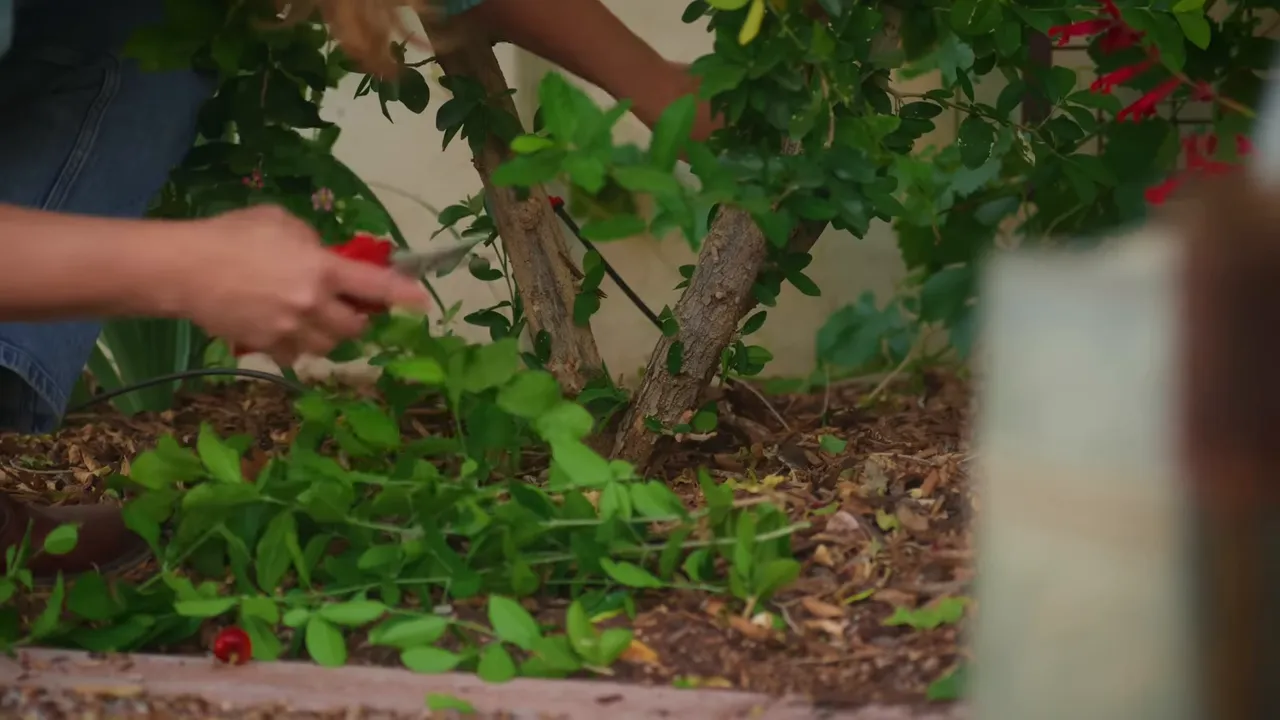
Barbados cherry doesn’t need the detailed pruning that some fruit trees require. Most of my pruning is about shaping the plant and making it work in the space.
I want to keep mine as a multi-trunked tree, with enough clearance that branches don’t grow into our seating area. You could also train it to a single trunk if that suits your garden better.
When I prune, I look for:
- Low branches growing into places where we sit or walk.
- Crossing branches.
- Dead branches.
- Growth that makes harvesting harder.
The low branches coming off the trunks aren’t necessarily suckers. They may simply be ordinary branches that don’t fit the shape you want. There’s no need to remove them unless you have a reason.
Wait until after frost to prune
Because Barbados cherry is frost-sensitive, wait until after your last frost before pruning. I wouldn’t give it a major pruning just before freezing weather.
If the tree has frost damage, wait until the danger of frost has passed before cutting it back. Young plants need the most attention and may need covering during a freeze. Larger, established trees may have some damage from the frosts we get here, but mine has been manageable in our conditions. That isn’t a guarantee for colder locations.
My Watering and Feeding Routine
My established Barbados cherry is on drip irrigation. I don’t give it additional water beyond that irrigation, and it has been fairly simple to maintain.
That’s different from saying it doesn’t need watering. Newly planted trees need closer attention, and a container-grown plant will dry out faster than mine does in the ground.
Feed the soil about three times a year
My feeding routine includes compost, worm castings, and Nutrient Plus about three times a year:
- Early spring: After the tree comes through winter.
- Before summer: Around late May or June, as I help the garden prepare for the heat.
- After summer: Around September, when I come back through the garden again.
I’ve liked using Nutrient Plus alongside compost and worm castings. My impression is that it helps support blooming, which is what I’m hoping for on a fruiting tree. That’s an observation from my garden rather than a promise of more fruit.
How I apply compost and worm castings
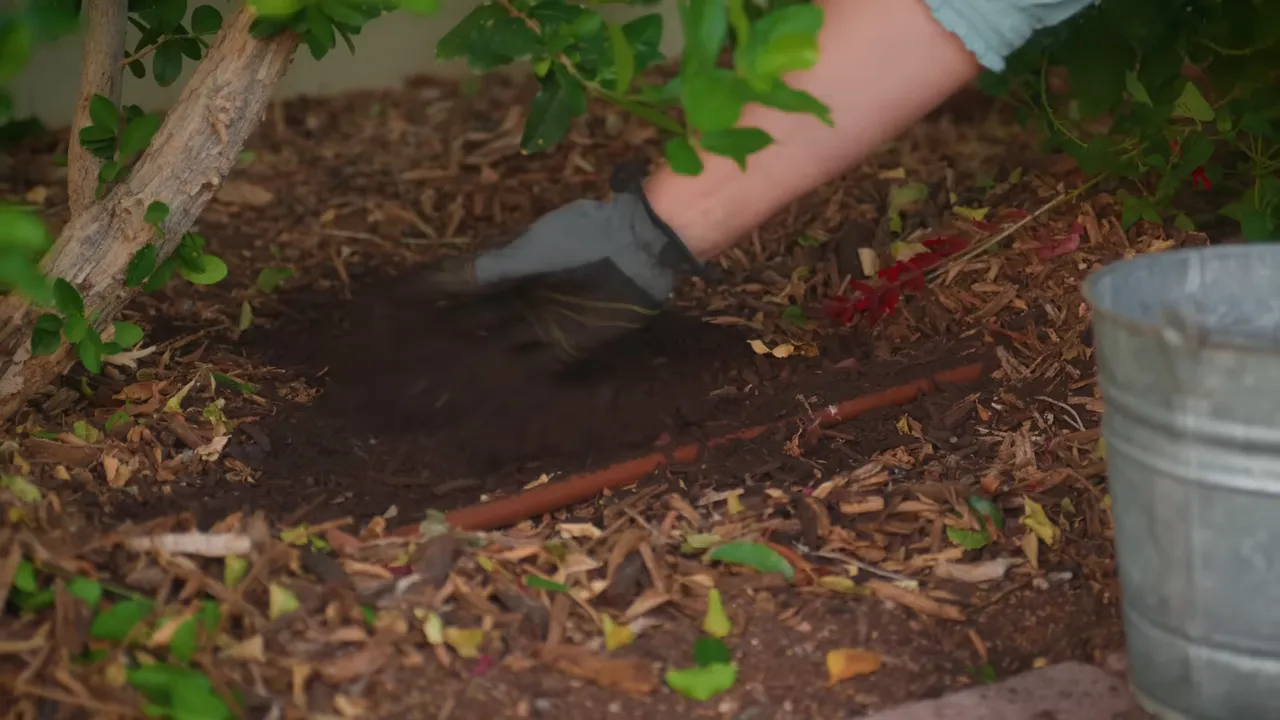
- Pull back the mulch if there’s still a substantial layer on the soil.
- Spread compost and sprinkle worm castings around the plant.
- Put the mulch back over the top.
- Water everything in.
- Apply the additional feeding product according to its directions.
If the old mulch has mostly broken down, I can add the compost and worm castings right over it instead of pulling it aside. The idea is to keep feeding the soil without making the process complicated.
Pests to Keep an Eye On
I haven’t had major pest problems on my Barbados cherry, but I do keep an eye out for aphids, leaf-footed bugs, and spider mites.
- Aphids: Let beneficial insects help manage them.
- Leaf-footed bugs: Look for eggs, nymphs, and adults, and remove them by hand.
- Spider mites: Spraying the tree off with water can help keep populations down.
For leaf-footed bugs, a small bucket of soapy water is a handy tool. Remove eggs when you find them, and knock nymphs into the bucket. If a flexible branch has a group on it, you can dip that section into the bucket.
Adults are quick, so they take a little more effort to catch. But removing them before they reproduce is much better than letting a population build across the tree.
Harvesting, Storing, and Enjoying the Fruit
Once Barbados cherries turn red, keep them picked. Ripe fruit will drop, so regular harvesting helps you enjoy the crop instead of cleaning it off the ground.
The skin is thin, and the fruit doesn’t keep for long. That short shelf life is one reason it’s not a common grocery-store fruit.
Eat it soon after harvesting, refrigerate it promptly, or freeze it. This is a fruit to enjoy fresh from your own garden rather than leave sitting around.
What does Barbados cherry taste like?
Despite the name, Barbados cherry isn’t a true cherry. It looks cherry-like, but its flavor is more sweet-tart and tropical. It has its own taste, and I really enjoy it.
If you can taste one before buying a tree, do that. I tried Barbados cherry at a home tour, realized I liked it, and decided to make room for it. No matter how well a fruit tree grows, it’s not a good use of limited space if you don’t enjoy the fruit.
We eat ours fresh, and a bowl set out for my boys doesn’t last long. I also like juicing the fruit and adding some to lemonade. It gives the lemonade a nice tart kick, and Barbados cherries are rich in vitamin C.
The seed surprise
Here’s something I didn’t expect: instead of one central pit, Barbados cherry has three seeds inside.
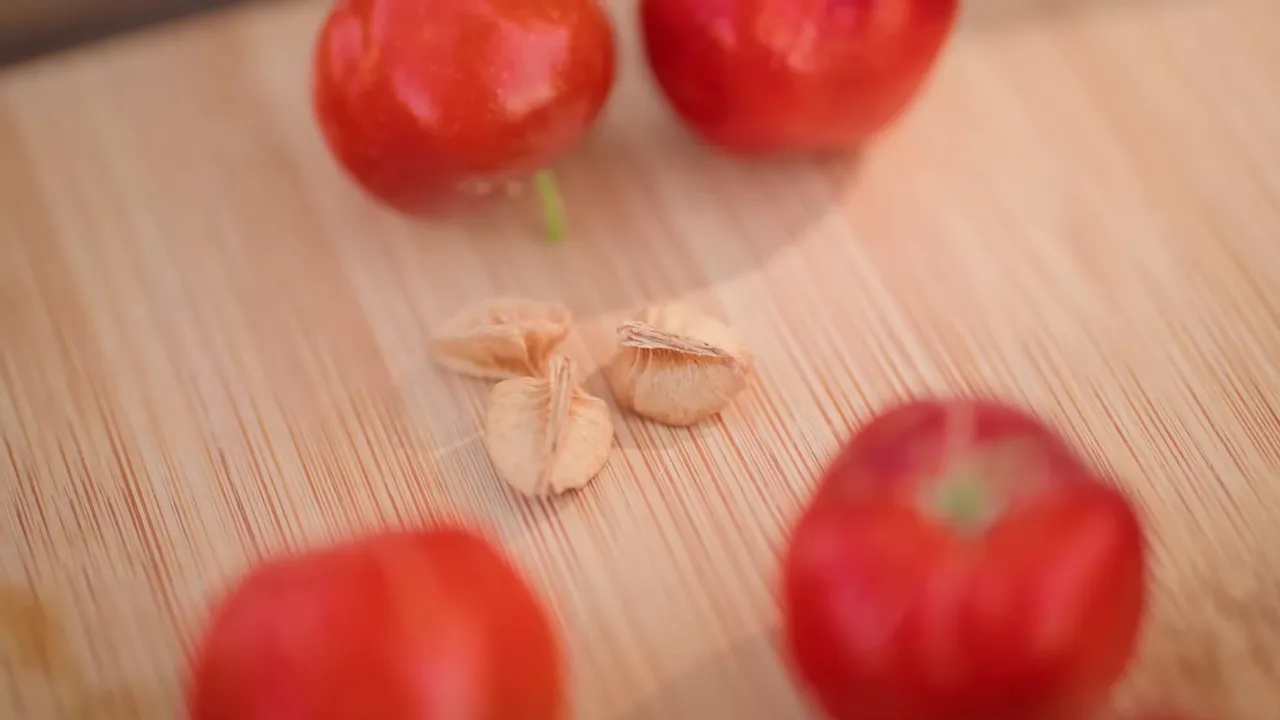
The seeds are smaller than a typical cherry pit. With a nice, large fruit, they haven’t bothered me. When eating the fruit fresh, I simply spit out the seeds. For juice, a small citrus press or juicer is another option.
Would I Plant Barbados Cherry Again?
Absolutely. In my small desert yard, it has given me fruit quickly, handled a hot west-facing location once established, and stayed attractive beside a place where we spend time.
It still needs the basics: sunlight, good drainage, irrigation, mulch, and frost protection when young. But the ongoing work has been modest, and the fruit is something my family actually enjoys. For me, that makes Barbados cherry worth its space.
You can find more planting and care information in my Barbados cherry growing guide.


