I plant marigolds in almost every garden bed, but I don’t expect them to solve every pest problem. A lot of the advice about these cheerful flowers takes a small truth and turns it into a much bigger promise.
Marigolds repel pests. They attract helpful insects. They fix nematodes. They’re easy to grow, and you can keep saving their seeds. Some of that is true, some is exaggerated, and some depends entirely on how and when you plant them.
Marigolds are worth making room for in the vegetable garden. The key is understanding what they actually do, then growing them with realistic expectations.
Key Takeaways
- Marigolds support beneficial insects but don’t replace good soil, proper watering, or regular pest checks.
- Plant several marigolds alongside tomatoes from the start for the researched whitefly benefit.
- Nematode suppression requires suitable marigolds grown densely as a cover crop before vegetables.
- Choose varieties to fit your space, pinch young plants, and save fully dried seeds.
Table of Contents
- What Marigolds Actually Do for the Garden
- Marigolds and Root-Knot Nematodes: A Cover Crop, Not a Protective Border
- When to Plant Marigolds From Seed
- How to Grow Marigolds: Sun, Spacing, and Water
- French vs. African Marigolds: Choose for the Space You Have
- Where I Plant Marigolds in the Vegetable Garden
- How to Save Marigold Seeds
- Why I Keep Making Room for Marigolds
What Marigolds Actually Do for the Garden
The biggest reason I grow marigolds is simple: flowers help support beneficial insects, and beneficial insects help manage pests.
Marigolds attract helpful insects such as hover flies, also called syrphid flies, parasitic wasps, and ladybugs. Hover flies can look like little bees, but their larvae feed on aphids. Parasitic wasps help with caterpillars. Having more of these insects around means I have more help in the garden.
That’s a different way of thinking about companion planting. Rather than expecting one flower to keep every pest away, I’m making room for the insects that help bring balance to the garden.
Marigolds and tomatoes: timing matters for whiteflies
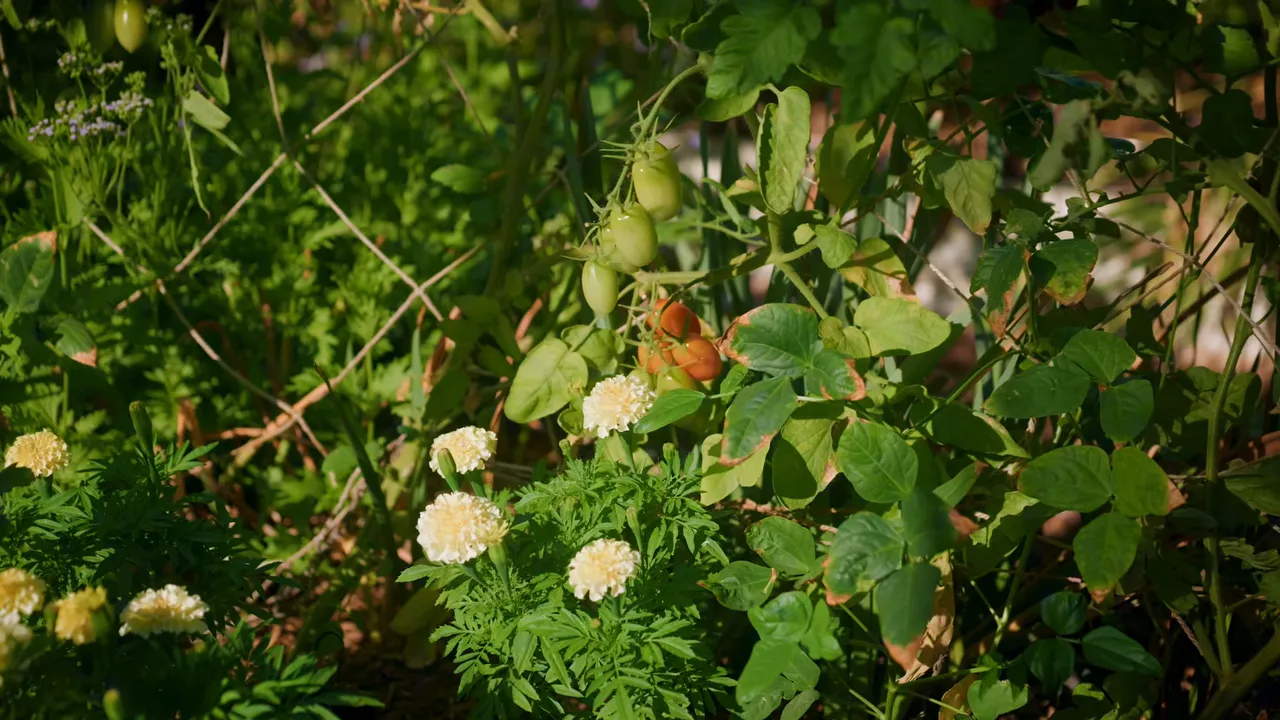
One benefit of planting marigolds with tomatoes does have research behind it: they can slow whitefly population growth. But the details matter.
A study of French marigolds and glasshouse whiteflies found benefits when several marigolds were planted alongside tomatoes from the beginning. Adding marigolds after a whitefly problem was already established did not provide the same protection.
Think prevention, not rescue. One marigold tucked beside a tomato after pests arrive isn’t the same thing as growing several together from the start of the season.
What marigolds don’t fix
Marigolds don’t replace daily garden checks, and they don’t stop all pests. Research hasn’t supported claims that they repel common pests such as cabbage flies and onion flies. Marigolds can attract pests themselves, too.
They also won’t correct poor soil or bad watering habits. And one marigold in a bed filled with a single vegetable crop won’t provide the same diversity as a mixture of flowers and herbs.
I use marigolds as one part of a healthy garden, not as a shortcut to one. My companion planting tips explain more about that broader approach.
Marigolds and Root-Knot Nematodes: A Cover Crop, Not a Protective Border
Here in Arizona’s low desert, root-knot nematodes can be a real problem, especially with crops such as tomatoes, Swiss chard, and beets. This is also where some of the most misleading marigold advice shows up.
Growing a marigold beside a vegetable does not reliably protect that vegetable from nematodes. That familiar companion planting arrangement has been tested repeatedly without providing the protection people expect.
The useful action happens within the roots of suitable marigolds, where toxic compounds can affect nematodes that enter them. The plant does not create an invisible protective barrier around neighboring vegetables. Susceptible vegetable roots are still available nearby.
How to use marigolds for nematode suppression
For this purpose, marigolds need to be grown as a cover crop before the vegetables, rather than simply tucked alongside them.
- Choose the right type. French marigolds and certain African marigold varieties can suppress particular nematodes. Don’t assume every variety will work.
- Plant the bed densely. Grow the marigolds throughout the area where you intend to plant the next vegetable crop.
- Give them enough time. Let them grow for at least eight weeks. Some research suggests up to four months for a fuller effect.
- Finish the cover crop before planting vegetables. Remove the marigolds or incorporate them into the soil, then plant the next crop.
Even used this way, marigolds suppress only certain nematode species. They aren’t a universal cure. But for root-knot nematodes, a properly selected and grown marigold cover crop is an organic tool worth considering.
When to Plant Marigolds From Seed
Marigolds are forgiving, adaptable, warm-season annuals. You can start them indoors, sow them directly outside, or buy transplants.
For outdoor planting, wait until after your last frost and until the soil has warmed to about 60°F. In much of the country, the options are:
- Start indoors: Sow seeds six to eight weeks before your last frost.
- Direct sow: Wait until frost danger has passed and nighttime temperatures are around 50°F.
Seeds usually germinate in five to seven days. They get going quickly, so there’s rarely a reason to start them extra early.
My low desert planting windows
In my low desert garden, I sow seeds and plant transplants outside from about February through May, depending on the weather. I plant again in fall, generally during September and October.
Those dates are a local planting window, not a rule for every climate. Even here, I pay attention to the weather rather than relying on the calendar alone.
How to Grow Marigolds: Sun, Spacing, and Water
In most climates, give marigolds full sun, aiming for at least six to eight hours each day. They’re tougher in heat than many flowers, but heat-tolerant is not the same as heat-proof.
Mine don’t always survive the entire low desert summer. A bed with some afternoon shade helps them last longer, but sometimes it simply gets too hot, even in a favorable spot.
For planting and early care:
- Sowing depth: Plant seeds about ¼ inch deep.
- Spacing: Allow 6 to 18 inches between plants, depending on the variety.
- Seedling moisture: Keep young plants consistently hydrated while they establish.
- Established plants: Let the soil dry a little between waterings.
- Feeding: Avoid overfeeding, which can produce lush foliage with very few flowers.
Once rooted, marigolds are fairly drought-tolerant. That doesn’t mean seedlings can go without water, but it does mean established plants don’t need constantly wet soil. Consistently soggy conditions can cause rot.
Pinch young plants for more flowers
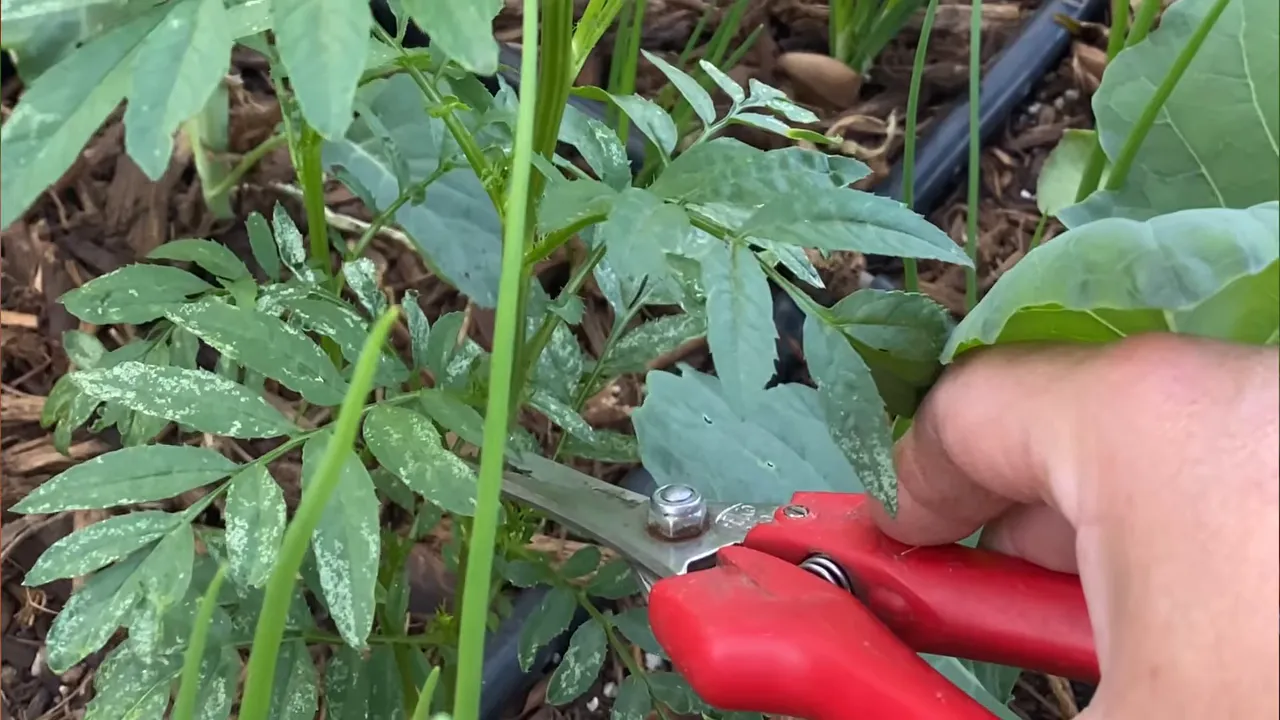
When marigolds reach about 6 to 12 inches tall, pinch or snip off the growing tip just above a leaf node, the point where leaves meet the stem.
An unpinched plant may grow one main stem with flowers concentrated at the top. Pinching encourages branching. More branches mean more stems, and more stems give you more places for flowers.
Deadhead, but expect a summer slowdown
Remove spent flowers regularly to encourage continued blooming. Leave selected flowers to mature only when you’re ready to save seeds.
French marigolds are often described as handling heat and humidity better than African types. Still, both may slow down or stop flowering during the hottest part of a hot, humid summer, then rebound in fall. A temporary pause in flowers doesn’t necessarily mean you’ve done something wrong.
French vs. African Marigolds: Choose for the Space You Have
If you’ve wondered why some marigolds stay small while others become huge, variety makes a big difference. Not every marigold is meant to grow into a towering, flower-covered plant.
French marigolds for smaller spaces
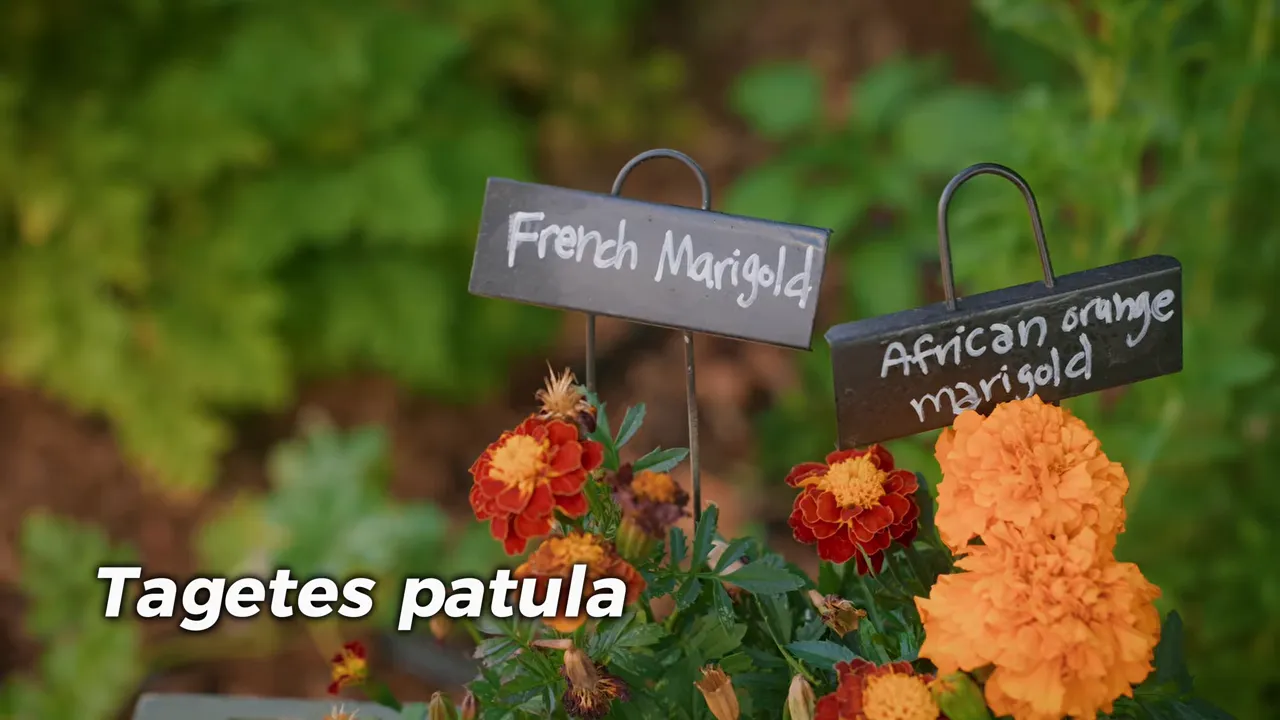
French marigolds, Tagetes patula, are generally smaller and bushier. They’re easy to tuck into vegetable beds and containers without crowding everything around them.
Queen Sophia is one I grow. Its compact habit makes it useful for the little spaces I leave open for companion plants.
African marigolds for large, showy plants
African marigolds, Tagetes erecta, grow into larger plants with bigger blooms. African Orange and Moonlight African are two I grow.
Mission Giant Orange Hybrid is another, and its name gives you a good idea of what to expect. It’s amazing how much plant can grow from one small seed or transplant.
If you want a compact flower around vegetables, choose a smaller French type. If you want big, showy plants and have room for them, the African types are wonderful.
Where I Plant Marigolds in the Vegetable Garden
I leave spaces in my beds for companion plants, and marigolds are one of the easiest ways to fill them.
I like growing them near tomatoes, peppers, squash, and eggplant. These are crops where whiteflies and other pests tend to show up, and where I want flowers nearby to support beneficial insects. That doesn’t mean marigolds have proven protection against every pest on each of those crops. It’s part of creating a more diverse planting.
Compact French varieties fit especially well into those smaller openings. Marigolds also grow well in containers, so a lack of raised-bed space doesn’t have to leave them out of the garden.
How to Save Marigold Seeds
Marigolds were the first seeds I ever saved, and that’s part of why I love them. Opening a dried flower head and finding all those seeds inside felt like discovering a little garden secret. I could grow them again without buying another packet.
The process is simple:
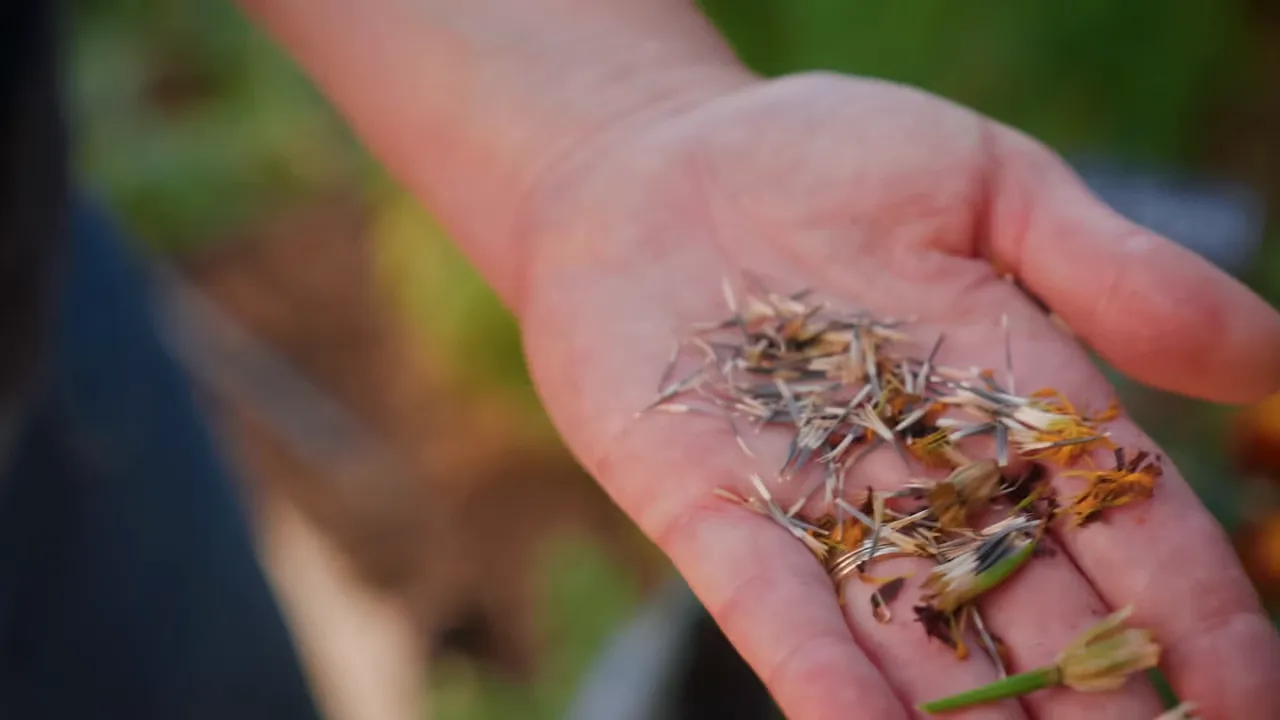
- Let selected blooms dry fully on the plant.
- Snip off the dried flower heads and place them in a paper bag to finish drying.
- Once completely dry, gently crumble or pull apart the heads to release the seeds.
- Store the fully dry seeds in a glass jar. They can last about three to five years.
Seeds saved from hybrid varieties may not grow true to the parent plant, so the next generation may look different.
Sometimes I don’t bother being very organized. I collect a few seeds, walk around the garden, and tuck them into empty spots as I go. It’s fun to see them germinate as the season shifts.
Why I Keep Making Room for Marigolds
Marigolds won’t fix everything in the garden. They won’t make up for poor soil, replace good watering, or eliminate the need to check for pests.
But they bring flowers into vegetable beds, support beneficial insects, and are easy to grow and save seeds from. Used correctly, they also have specific roles in whitefly prevention and nematode suppression.
That’s plenty of reason for me to keep planting them. They don’t need to be magic to be worth growing.


